
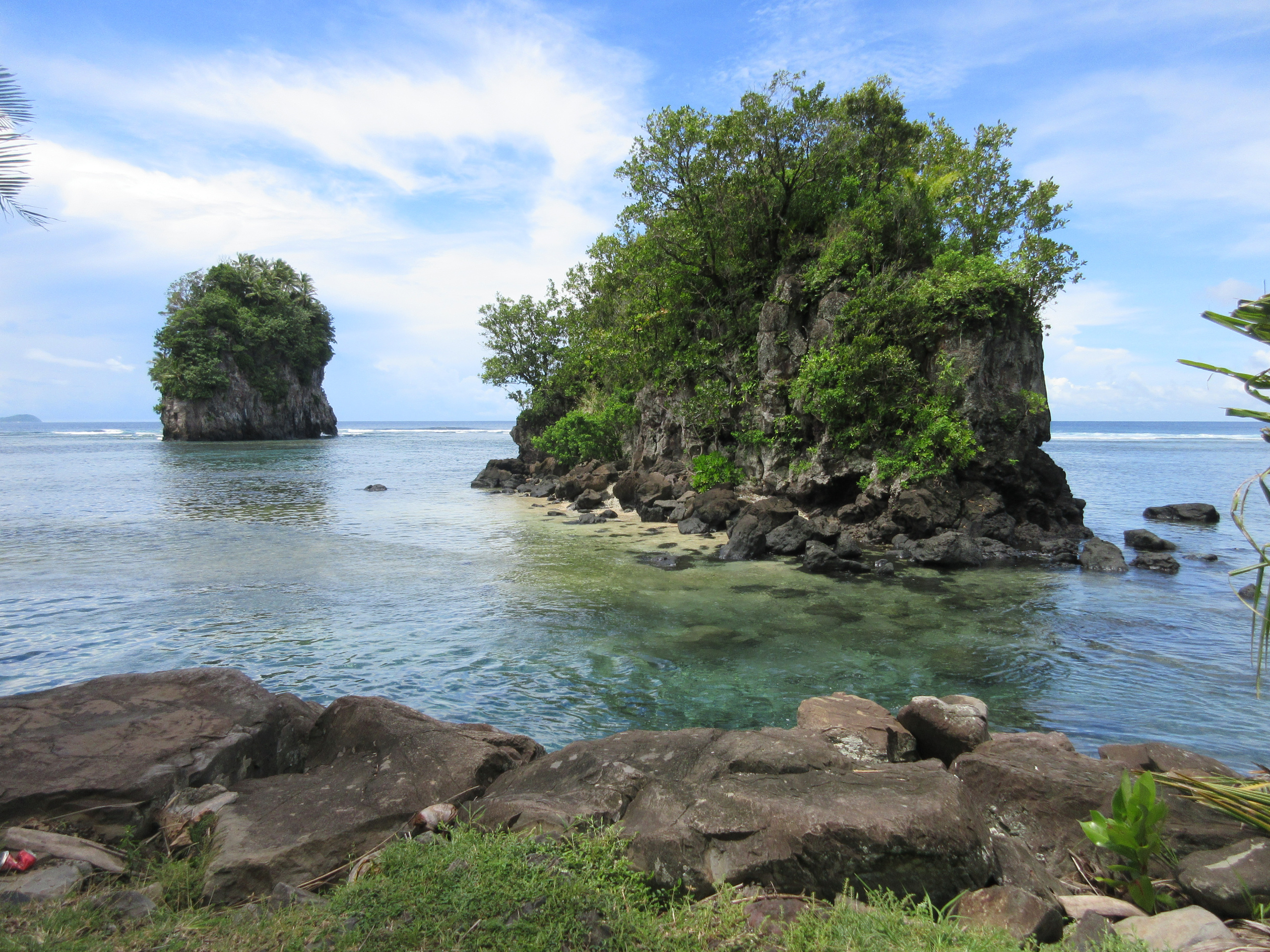
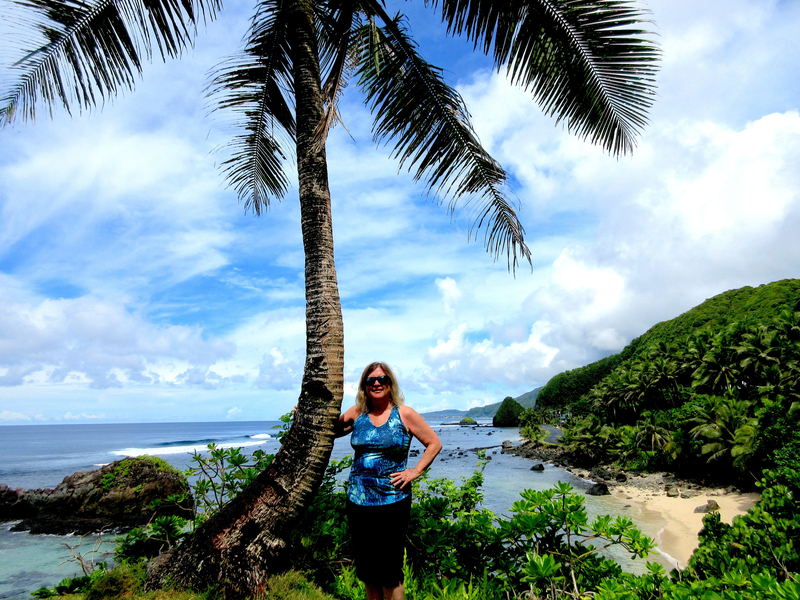
Magnificent Ocean Scenes abound
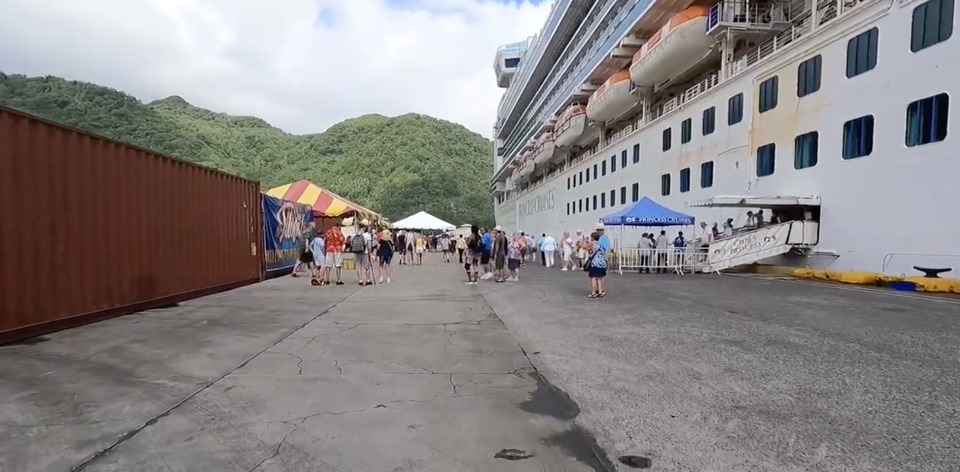
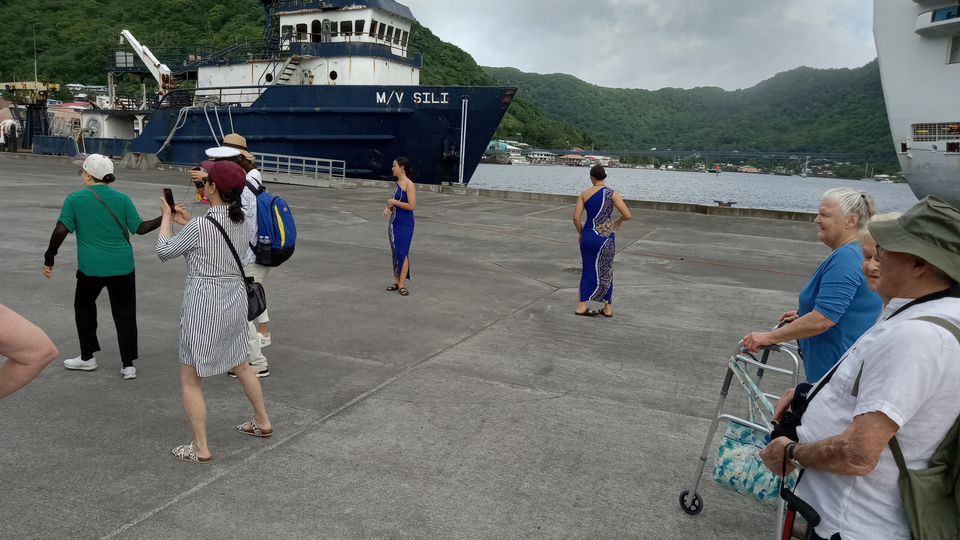
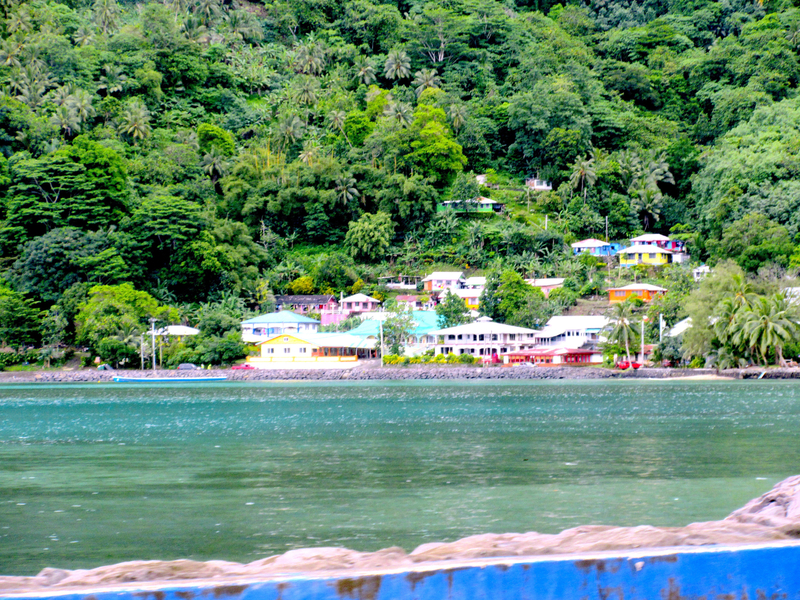
Pago Pago, the capital of American Samoa, comprises of a string of coastal villages on Tutuila Island. The letter “g” in Samoan sounds like “ng”; thus Pago Pago is pronounced “pahngo pahngo”. It’s a gateway to the National Park of American Samoa, which protects lush rainforest, coral reefs and waters visited by humpback whales.
It was quite a sail from Maui, Hawaii down here. 2,575 nautical miles to be precise, more than 6 days, during which quite a few of the 2,500 passengers got an upper respiratory infection that did not want to go away. Upon arrival there were a couple of ambulances waiting at the bottom. Some passengers were taking off the ship. Of course you want to go on land, although you don’t feel like it. We went to find Vicks Vaporub, but at the end of the day all we found was some kind of local cold remedy that featured the name Vicks but did nowhere near have its potency. We know, we’re experts on the matter.
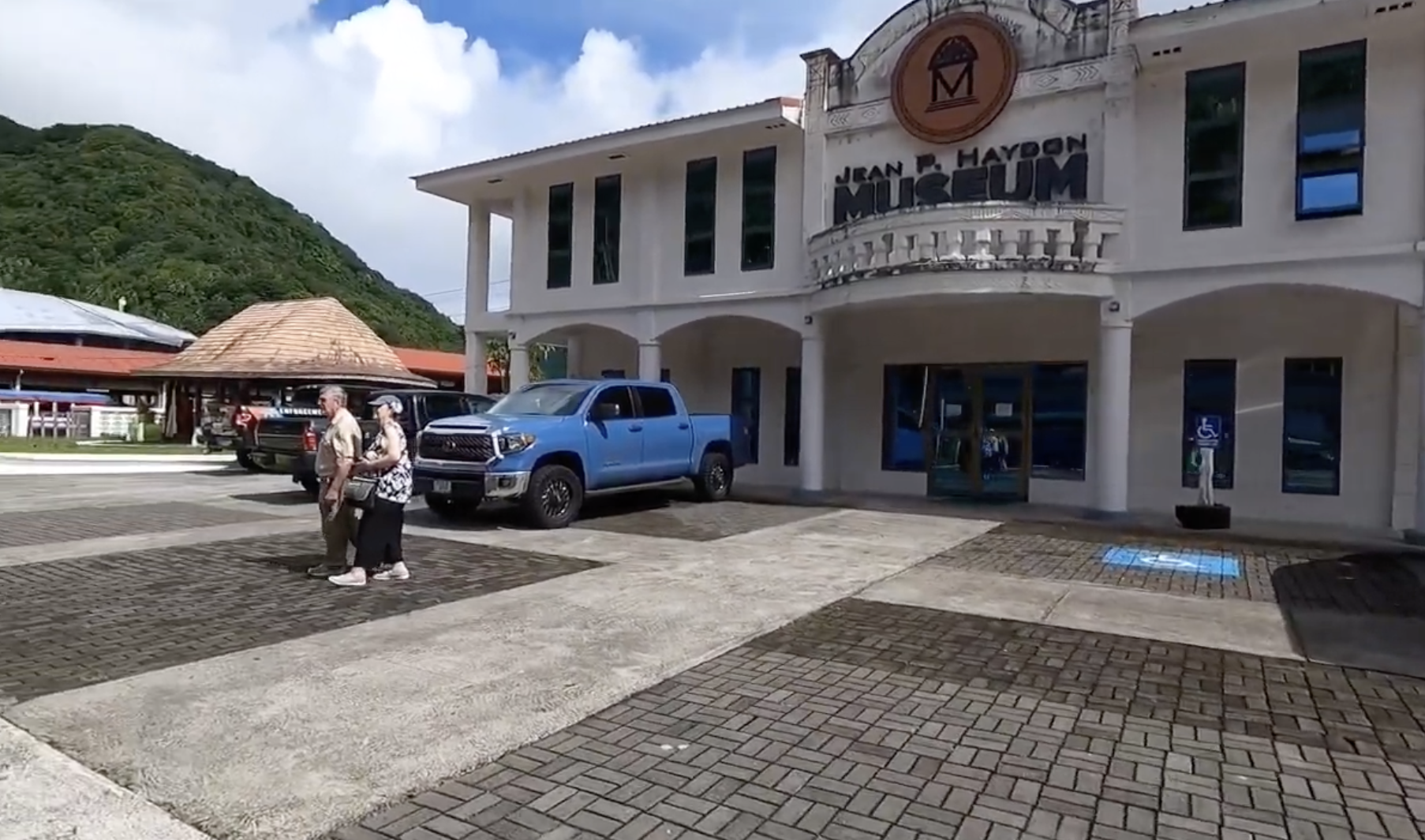
J.P. Haydon Museum
Fagatogo village (the capital?!) is home to the Jean P. Haydon Museum, exhibiting local historic artifacts in a former U.S. Navy facility. A trail leads up to Blunts Point Battery, a WWII gun site
After several centuries of colonial back and forth between England, Germany and the USA, Pago Pago finally became a US territory in 1900. The reason for the long fight was actually the natural deep, very protected harbor of Pago Pago and the fact that the island was located smack in the middle of the best whaling grounds in the world. Always keen to discover good deals, the Americans quickly figured out they could catch and process large predatory fish such as tuna and swordfish right off the deep harbor.
During our ship’s arranged tour we learned that Tuna canning is the main economic activity in town. Exports are almost exclusively from tuna canneries such as Chicken of the Sea and Starkist (Heinz), which are both located in Pago Pago. 14% of the population is employed here and they export close to half a billion US dollars of canned fish and pet food a year.
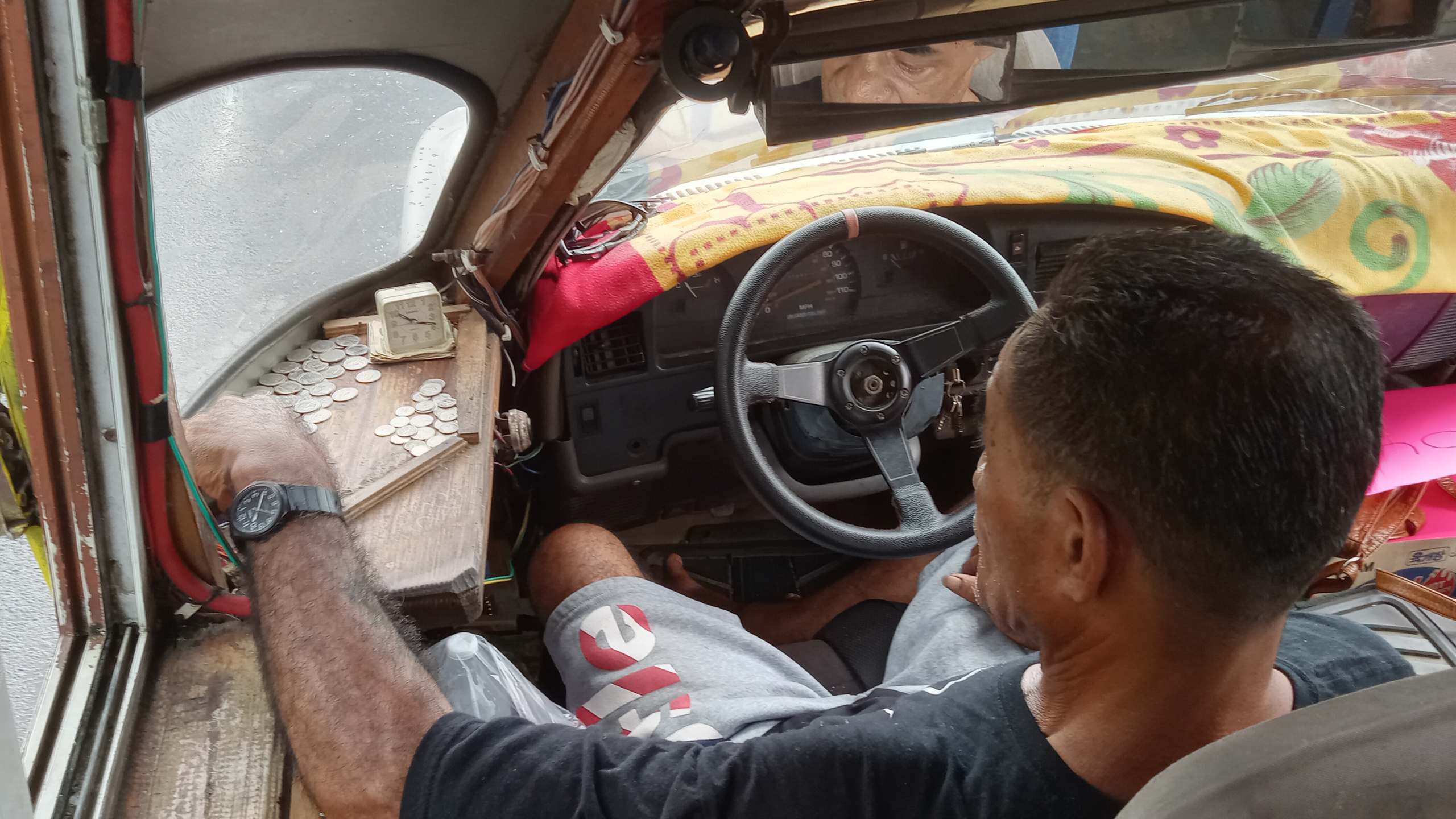
He just drove while she talked…
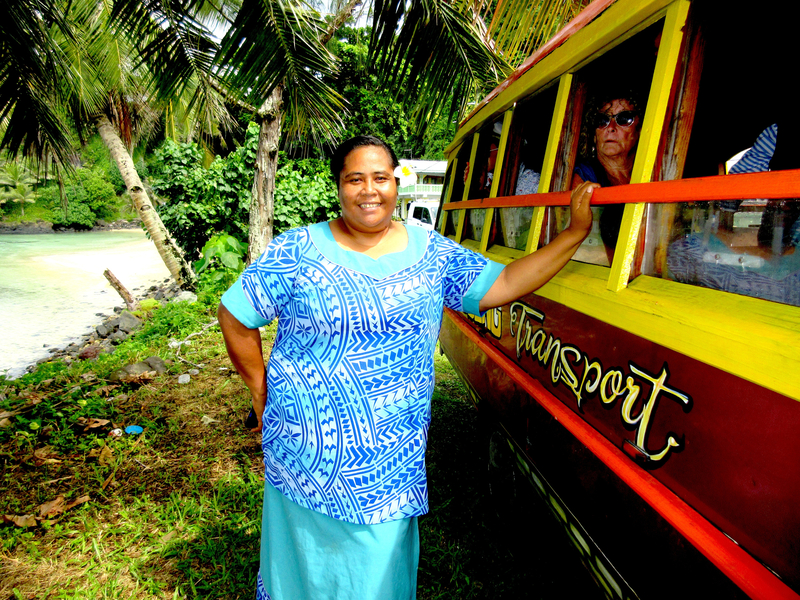
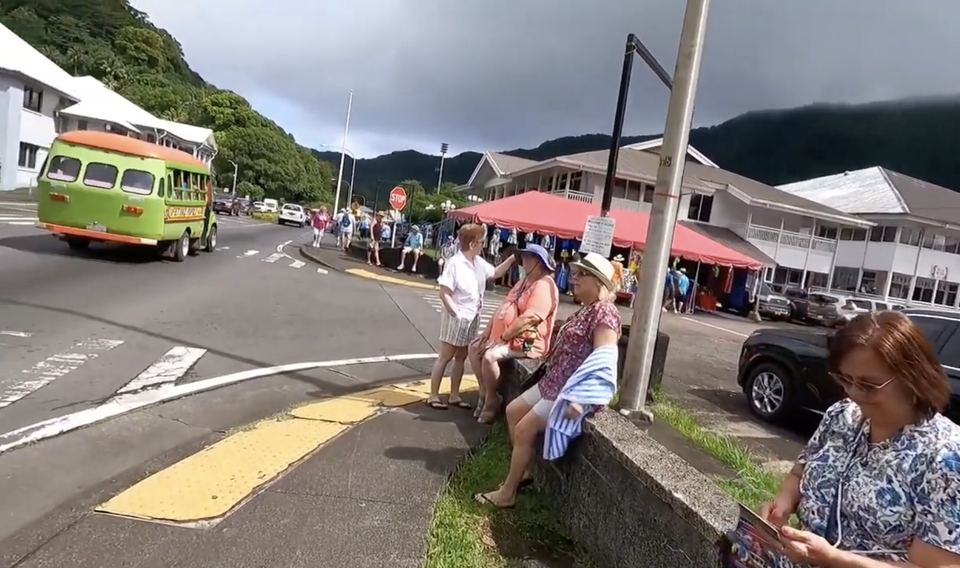
Our tour vehicle needs a separate description for readers that are not used to exotic islands and road conditions. We’re talking a 1975 or there about, chassis of a Ford/Chevy or Datsun/Toyota truck, completely rebuild with a passenger wagon, hand-built for some 12 to 16 passengers and decorated by everything that may make you feel comfortable such as curtains and kitchen items or religious relics of questionable history. The tour was only $25 per person, but on several occasions we thought the truck’s sounds indicated it was done and over with. Probably that is the charm however. The driver and his wife with an unpronounceable mile long name took us around the middle of the island with many little villages up and down the road. What’s interesting is to see that many houses have their own little graveyards, only meant for family. This is a clear indicator that communities have longevities. Samoans hold on to their circles. But the question arises after seeing a for sale sign on a house; does that include the graves? And here is where I learn something about humanity.
When Samoans sell their home, which happens to include a couple of graves, they will perform the ritual for re-interring human remains, which is termed liutofaga. It involves opening of the grave, removing the bones, oiling them and, with accompanying prayers, wrapping them in tapa cloth for re-interment elsewhere. Life can be make so simple, doesn’t it?
After a couple of photo stops, we are returned to the cruise docks, give a quick goodbye to the local representative and mount the Ships Planck for a late afternoon liquid snack. We’re both feeling the respiratory pressure so we decide on room service for the evening. Maybe a lot of hot chicken soup will do the trick. We hope so.
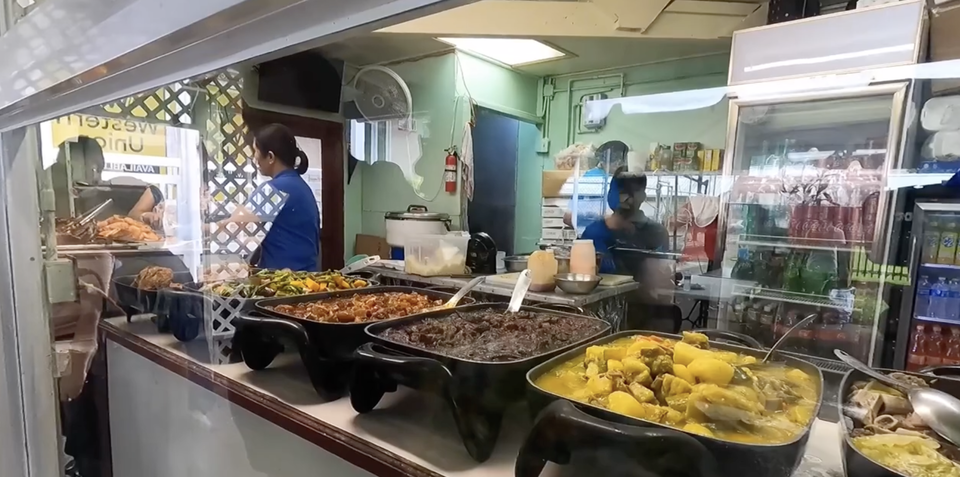
Pago Pago is a South Pacific Island that has been touched by western culture, but somehow managed to keep an authenticity about it. It’s literally located in the middle of nowhere Pacific Ocean, which is probably the reason why it kept some local color.


Recent Comments