
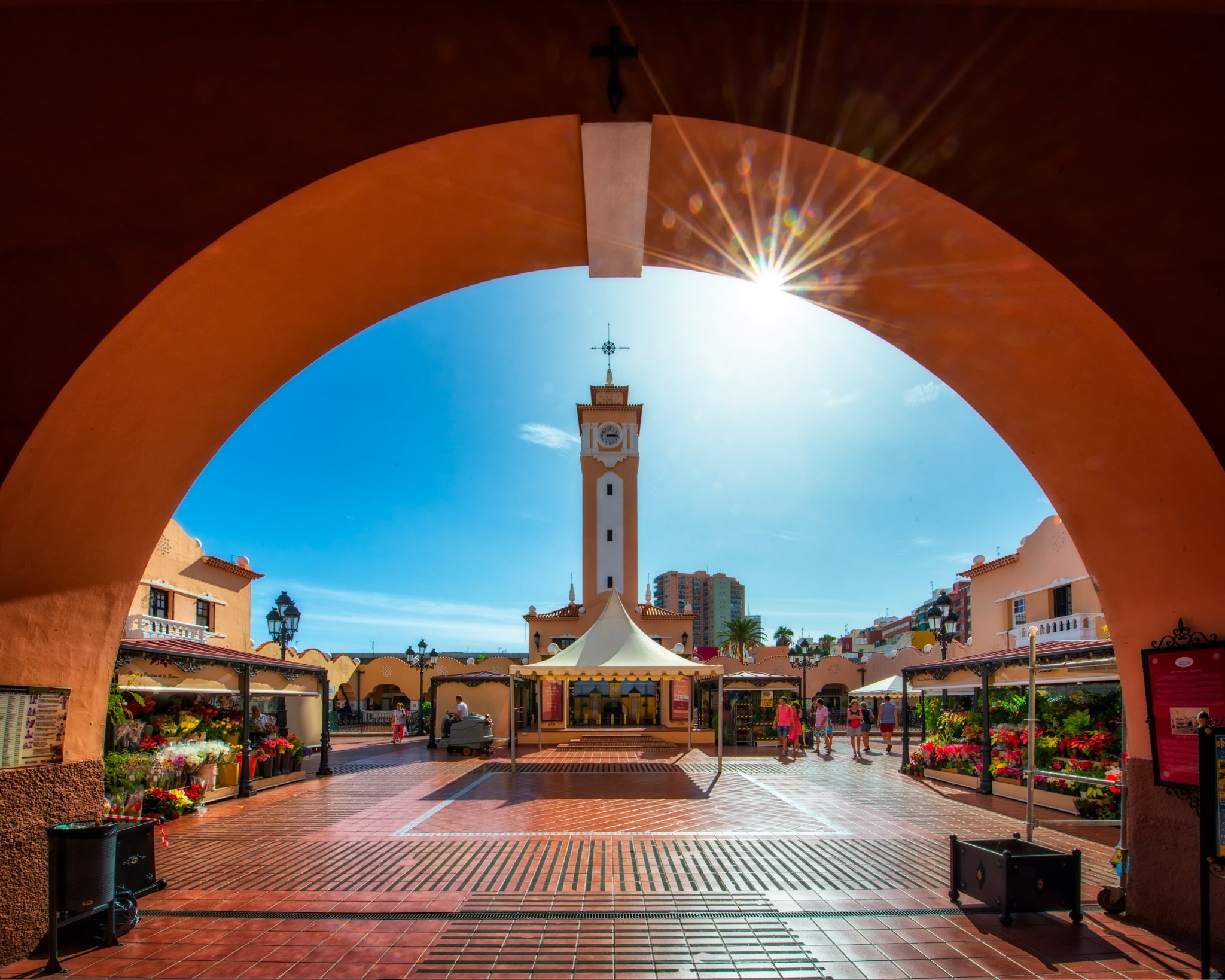
The Market of our Lady of Africa – Santa Cruz, Tenerife
Storms to the north forced us to change the Portuguese Island of Madeira for Santa Cruz de Tenerife for the much farther south Spanish Canary Islands. Santa Cruz de Tenerife was a good choice, especially since we had visited Madeira a couple of years before and were not totally impressed, as the island definitely breathes resort tourism, which we try to avoid.
Santa Cruz because of its sheer location just off the south of Morocco’s Sahara still inhibits a true African culture mixed with Southern Spanish atmosphere. It’s a lively combination of various historic influences. It is the largest island in the Canary Archipelago, and like its brethren Canaries, Tenerife was formed by fierce volcanic activity. Its landscape remains dotted with volcanic cones and areas of intense geothermal activity. Towering over the island is Mt. Teide, an extinct volcano since 1909 that, at 12,200 feet above sea level, is the highest peak in all of Spain. Santa Cruz de Tenerife is the island’s capital and our port of call. We decided to stick to town with Darcy and Caralee and make it a stressless fun day.
Santa Cruz is located on the northeastern shore of Tenerife has a population of more than 200,000 inhabitants. The island is home to close to a million residents, making it Spain’s most populated island. Its climate is known as the “Island of Eternal Spring” and we definitely enjoyed a token of spring that day.
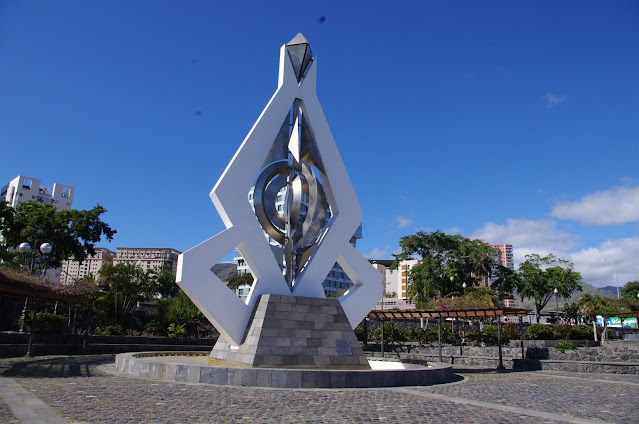
The famous Wind Sculpture
We walked past the Wind Sculpture located in the center of the square in front of the Auditorio de Tenerife, the Castillo de San Juan and the Parque Marítimo César Manrique.
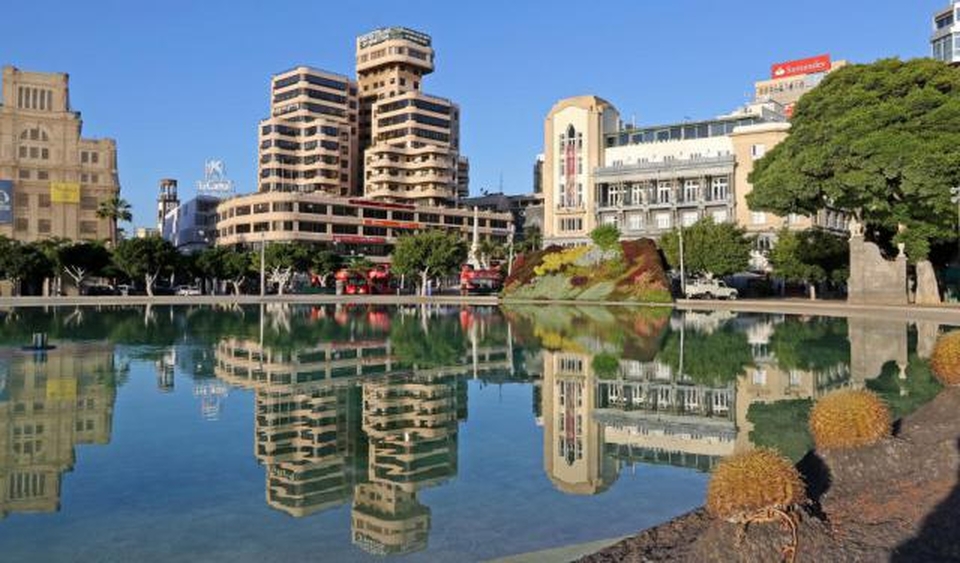
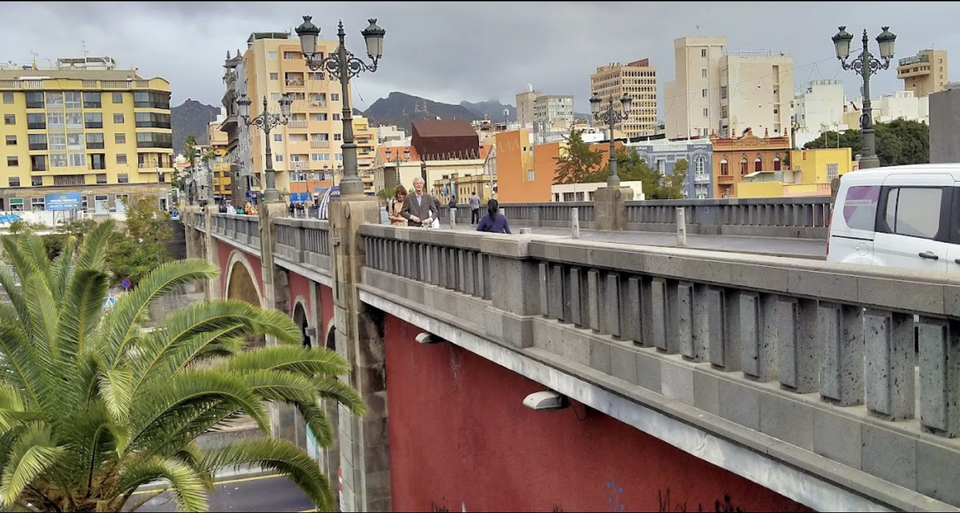
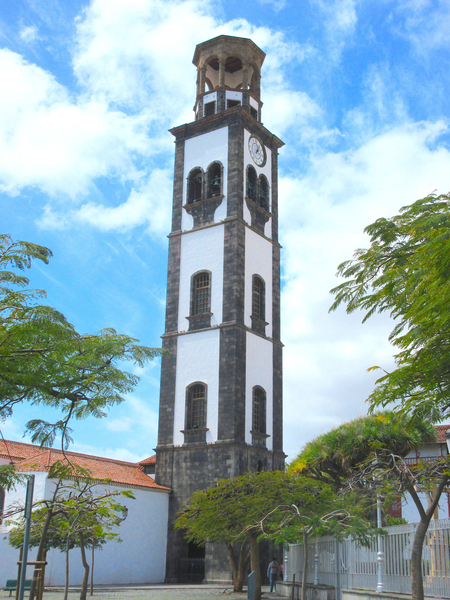
Walking down the main shore drive we passed a beautiful ‘sunken’ park and after crossing a couple of major la rambla sized pedestrian shopping street, we crossed the bridge and came up to the entrance to the famous Mercado de Nuestra Señora de Africa, locally known as La Recova. And what a pleasure that was. It stands on the site of the former Monastery of San Francisco. Its distinctive architecture, inspired by Moroccan aesthetics, features three courtyards and a clock tower, making it an architectural landmark in its own right. The market was a visionary project designed to centralize the city’s food supply and create a modern, hygienic marketplace for the growing urban population. Today it provides a daily showcase of the island’s agricultural bounty and rich culinary traditions.
Visiting this market offers a direct connection to the local culture and heritage. It’s a perfect way to immerse yourself in the authentic rhythm of the town and its vibrant daily life. You’ll find everything from exotic fresh produce to traditional Canarian specialities here, highlighting the island’s unique offerings and the diversity of its agriculture. The enormous, partly open air market, was inaugurated in 1943 on a neo-colonial architectural base, as a tribute to African Culture and the Island’s Fishing history. The fresh markets give an eye’s delight of color and composition. The people were not rushing, it was a rather slow stroll and moving from stand to stand. The flowers and fresh vegetables and fruits were generous in providing this area with vivid colors. And the smell! The mixture of all possible herbs, flowers and bakery.
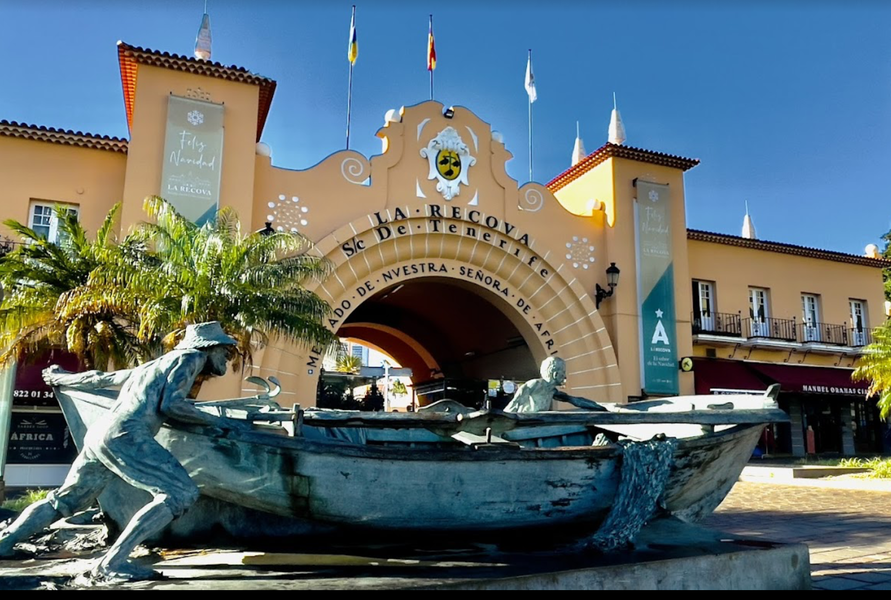
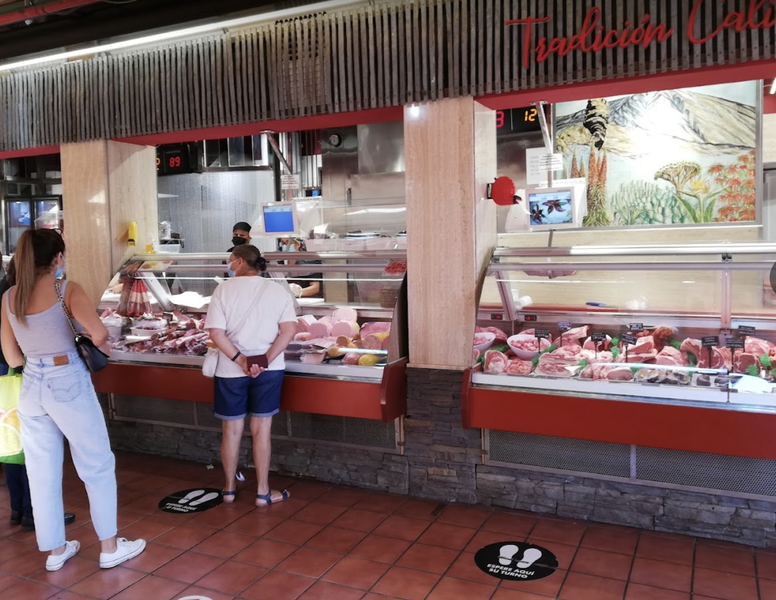
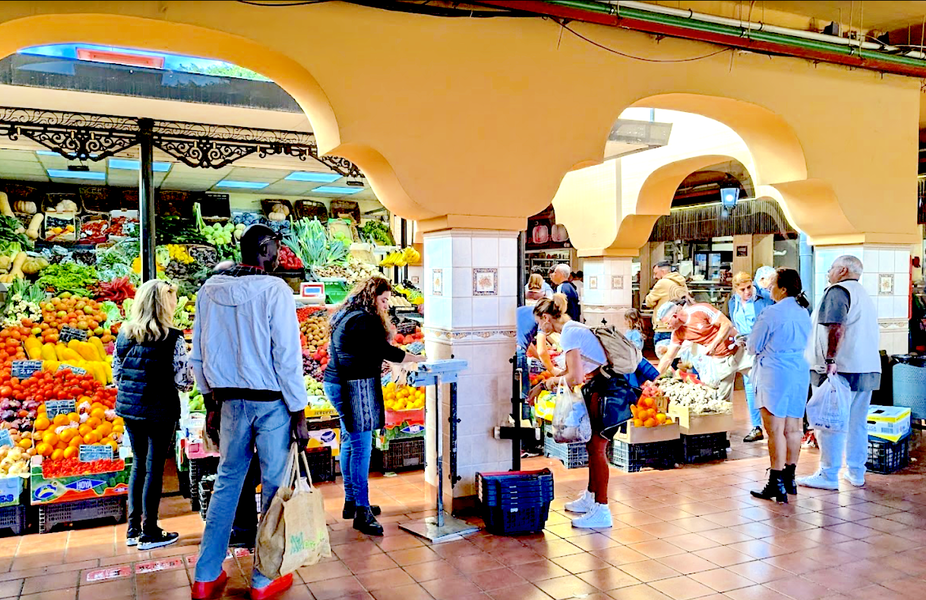
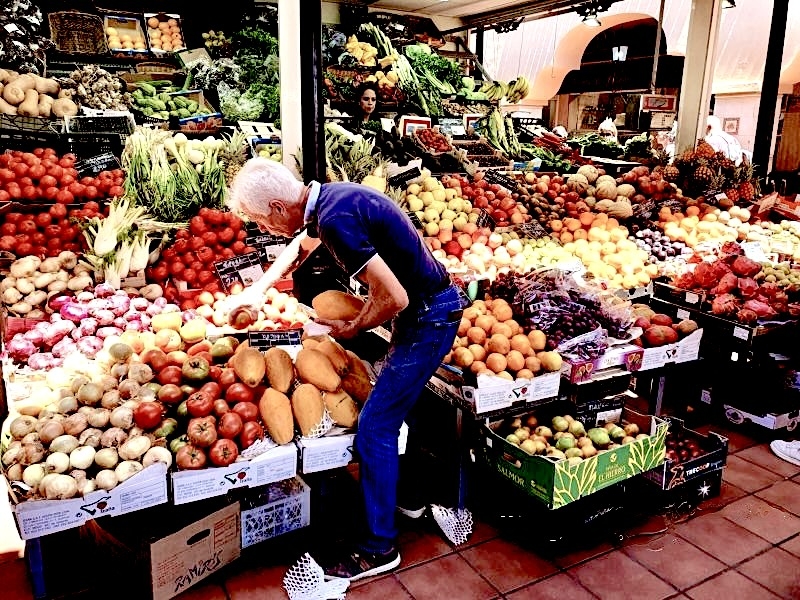
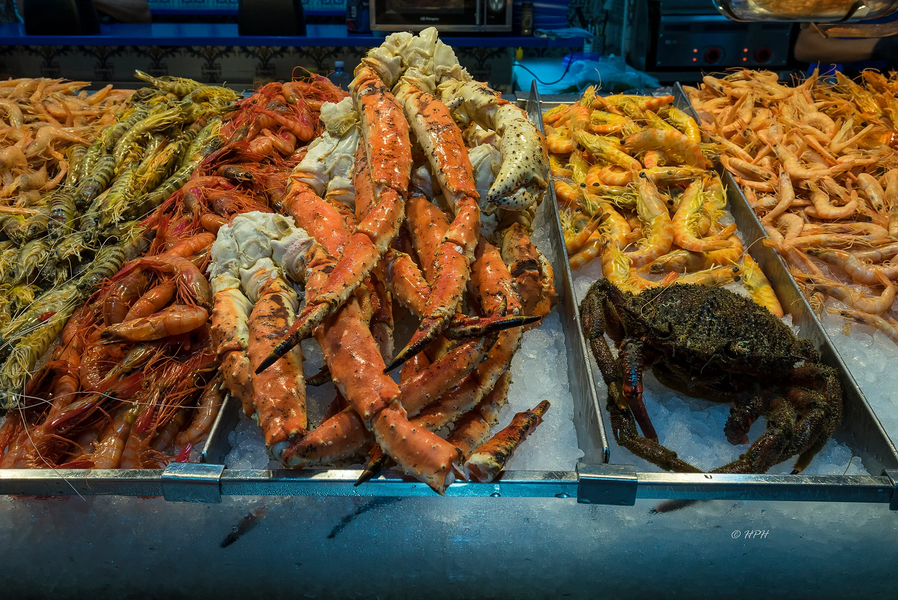
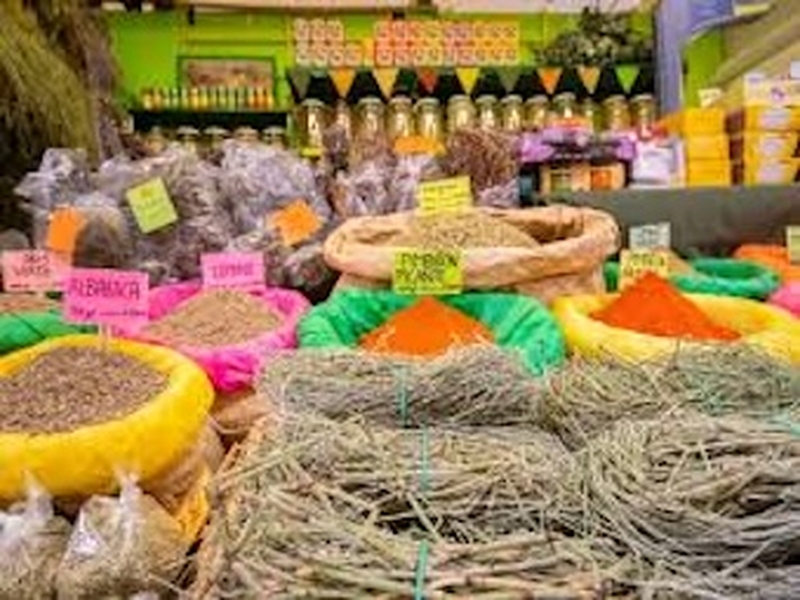
It is one of those places where you want to get your wallet out and start buying bags of stuff, and then you realize with certain sadness, you’re on a cruise ship where everything food is included in the ride and the fridge in your stateroom is too small for a cantaloupe. In the end you buy some exotic spices as a gift for friends back home, because you want to leave some of your “wealth” behind for these friendly, smiling, hardworking people.
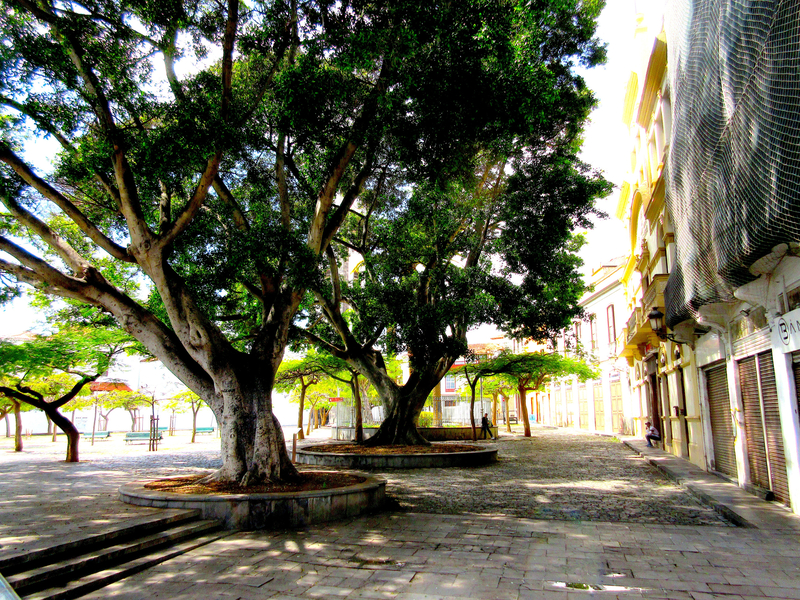
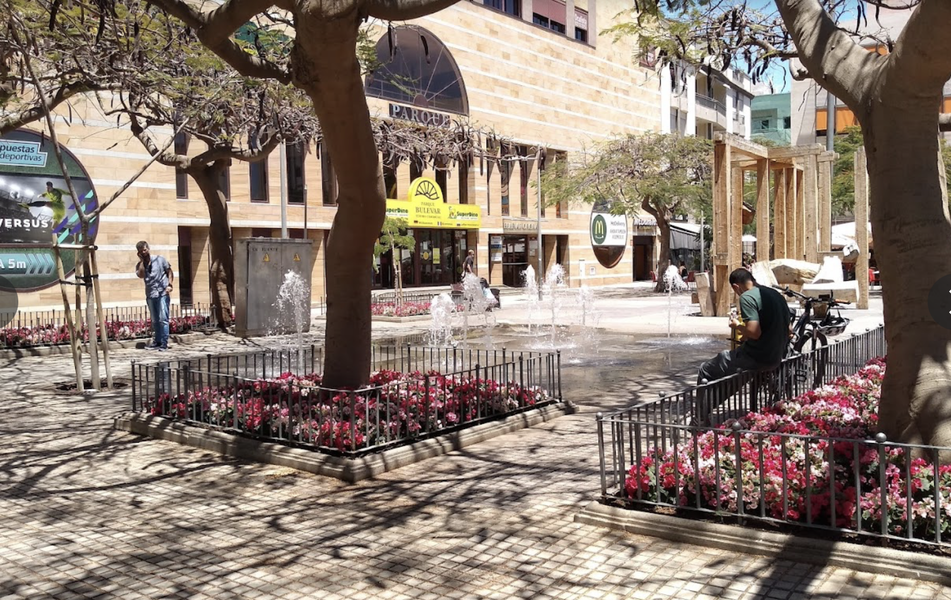
After almost 2 hours of pure delight we leave and stroll in search of a nice outside café where we can get a drink and maybe a local snack and spend a while doing our favorite thing on vacation: people watching.
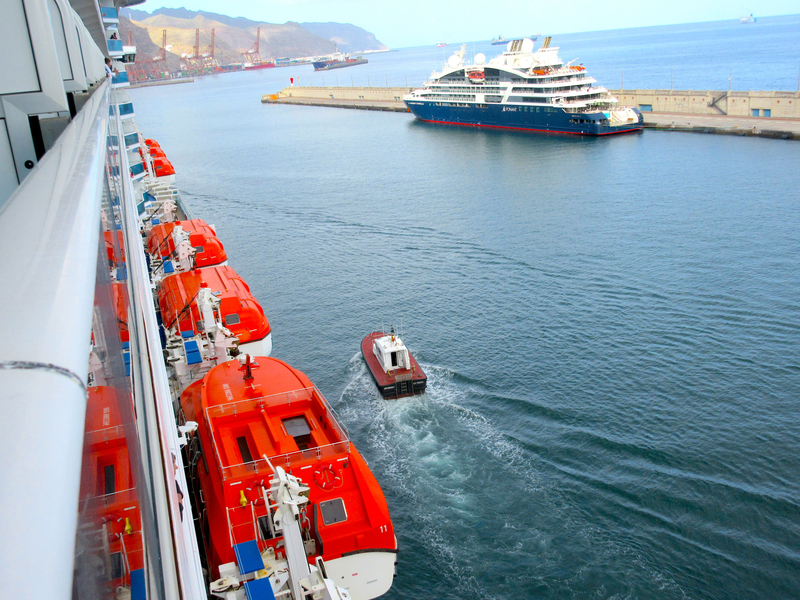
Darcy and Han decided that they could live on this island. Han actually has a history with the Canary Island where he helped his friend, architect/developer Peter Riteco, in the late 1970s develop and market a resort, Parques Holandés, on the neighboring island of Fuerteventura. Old memories kept floating the afternoon away, until it was time to return to the ship.
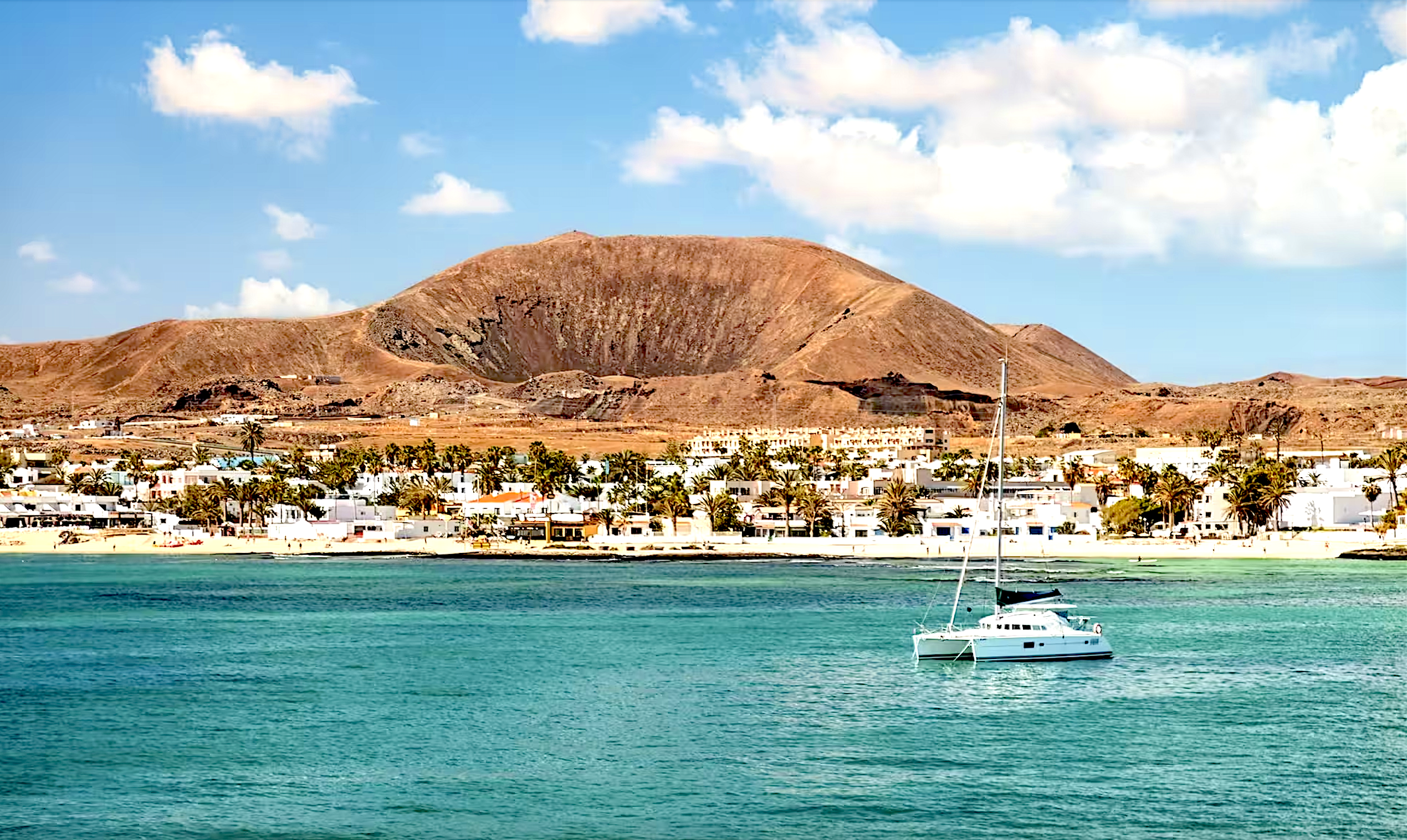
Parques Holandes, Fuerteventura
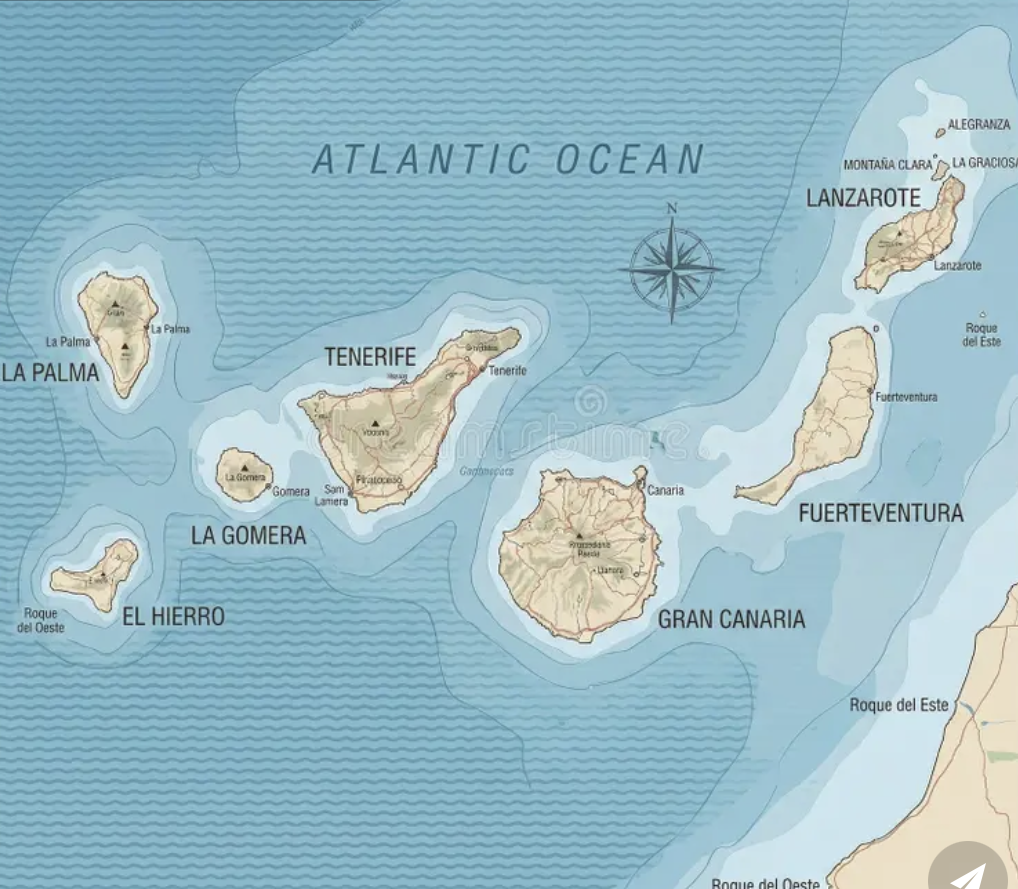
The Canary Islands as a tourism destination were developed in the early 1960 by Scandinavian, Dutch, ,British and German vacation suppliers. Some of the islands have suffered from over-development, while others followed a more cautious approach. Definitely worth a destination visit of several days to weeks.


Recent Comments