
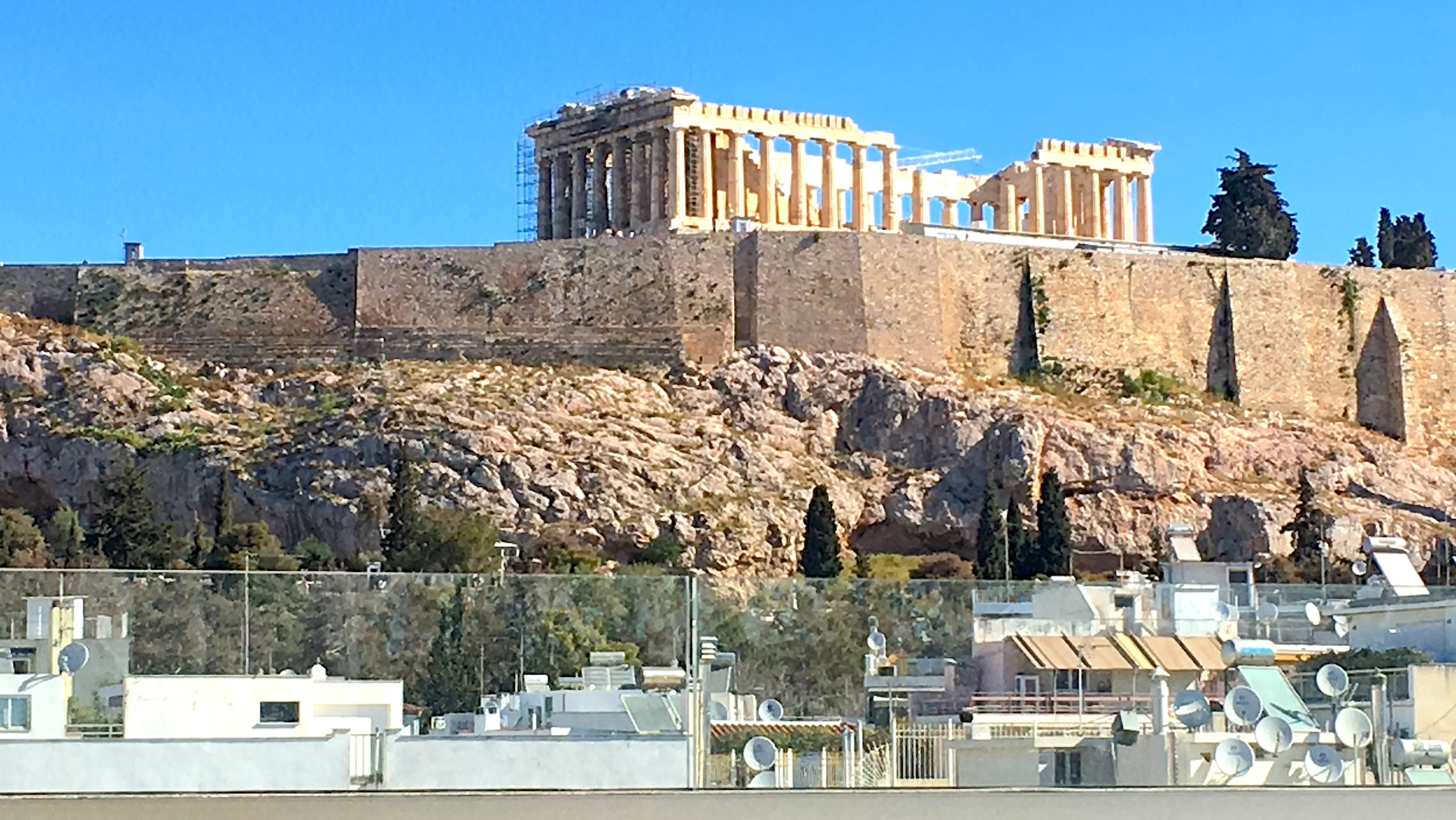
View of Acropolis from our Athens hotel rooftop
Today, April 10 our cruise ends in Piraeus, the port city for Athens, Greece. Hard to believe that the last 30 days were spent on a giant cruise ship with some 3,000 other passengers and we still felt like we had not had enough time on the water. Fourteen destinations later we had arrived in the ancient city of Athens where we had booked a small boutique hotel in the Palak neighborhood, directly under the shadows of one of central Athens, most famous landmarks, the Acropolis.
Of course the end of a cruise is a big let down in our experience, as these ships arrive early in port and want you off in about a 2-3 hour early morning window, after which their crews race to clean, sweep, provision and get ready for the next load of passengers crowding out the ship a couple of hours later. We hugged our new Princess “friends” goodbye and took a taxi our hotel into the city of Athens. The Port of Piraeus is one of the largest passenger ports in Europe. The port’s three cruise terminals are all a 20 to 30-minute taxi ride from the heart of Athens, depending on traffic; cost is approximately. $20 – $25. The port is also a major departure point for ferries to the beautiful Greek islands.
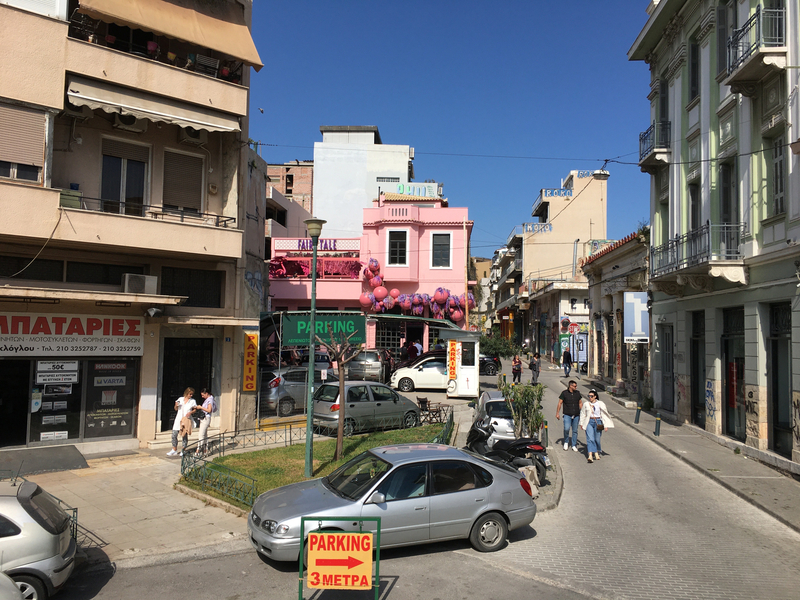
Thirty minutes later we were in the city part of Palak in search of our hotel for a 3 night stay. At the quoted rate the taxi drops us off at our little hotel in a maze of twirling and twisting streets, full with lively shops and restaurants.
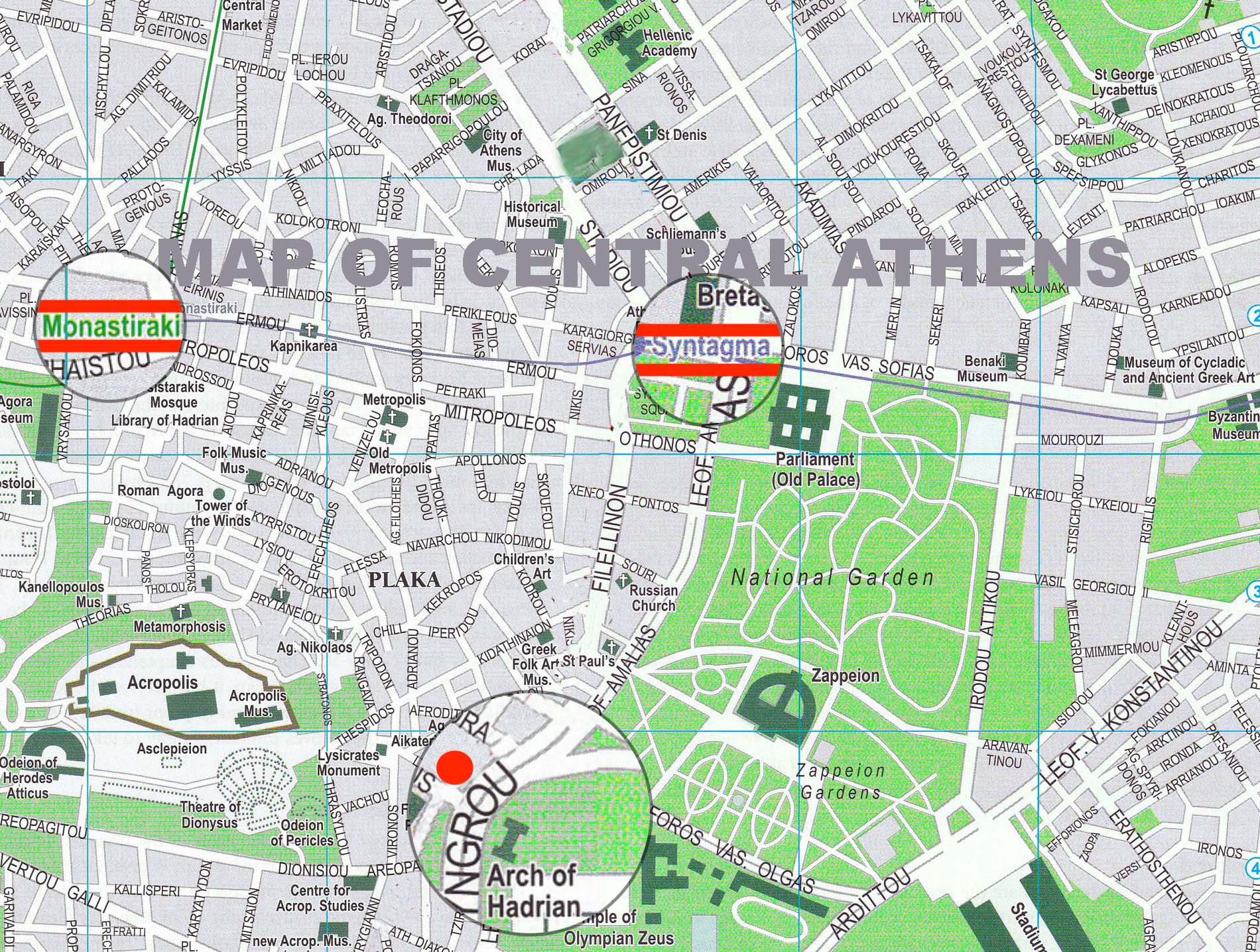 Some general information about the ancient City of Athens and how to get around in a city that carries the floorpan of a maze.
Europe’s oldest capital, is the birthplace of democracy, named for Athena, the ancient Greek goddess of wisdom, strategic warfare, handicrafts, and reason, famously born fully grown and armored from the head of her father Zeus.
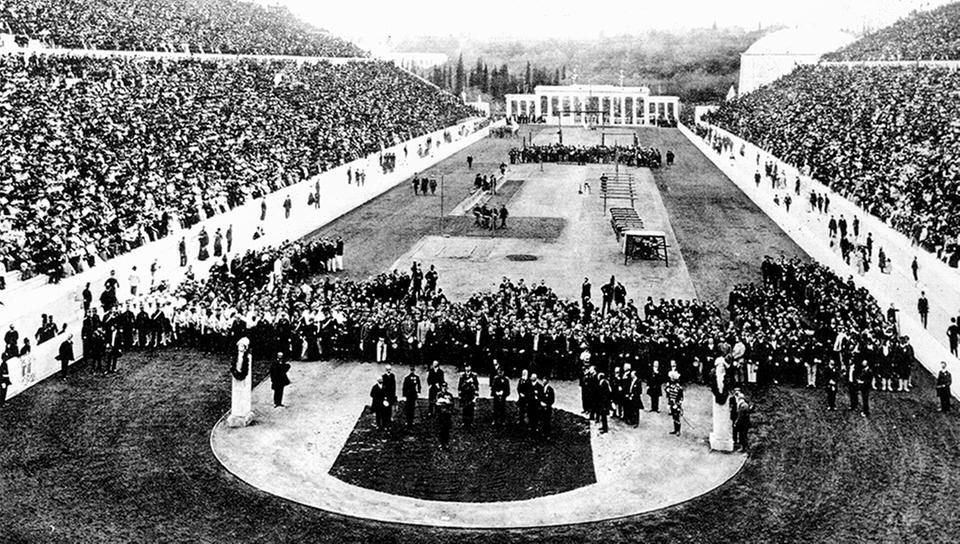
Athens is a cradle of Western civilization, featuring ancient sites like the Acropolis and hosting the first modern Olympics in 1896. The city of about 650,000 is surrounded by the mountains: Aigaleo to the west, Parnes to the north, Penteli mountain located to the northeast, and Hymettus to the east. Most formations are of limestone or marble, from which the ancient buildings of the city were constructed.
The plain on which the city of Athens lies, contains isolated limestone hills, including Lycabettus hill, which rises 339 m (1,112 ft) above the sea, and the flat-topped Acropolis, 156 m (512 ft) high, around which the city grew.
Here is some advice as how to navigate the city with confidence:
1. Download Offline Google Maps Before You Arrive
Do this over Wi-Fi before leaving home. It ensures navigation works even with spotty signal in Plaka’s narrow alleys. Open the app, tap your profile icon (top right), select Offline maps, and zoom out to include the city center, Athens Airport (ATH), and Piraeus Port. I also recommend you “Star” (save) your hotel and the Acropolis so they are instantly visible on the map.
2. Learn the “Big Three” Squares
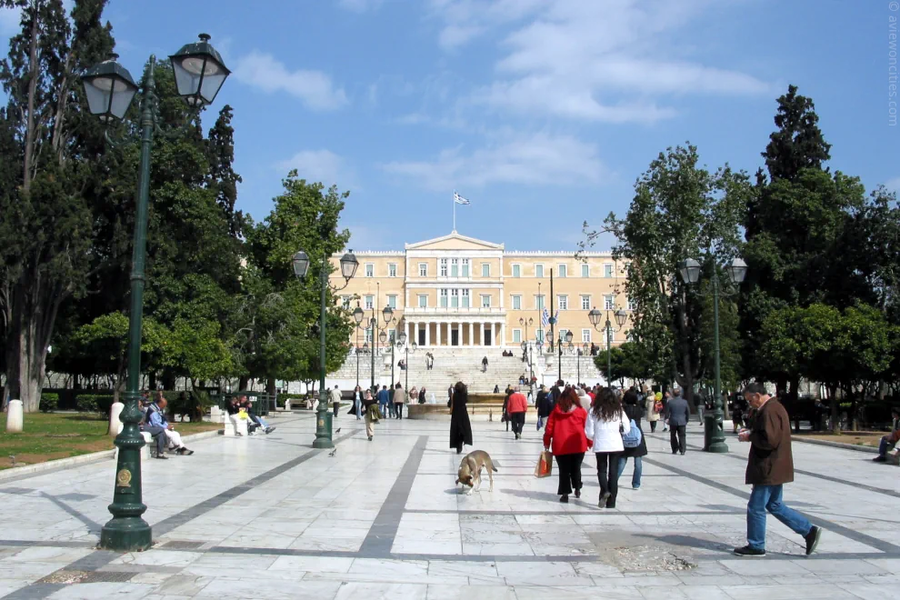
Use these three squares as anchors to orient yourself. Syntagma Square is the transport and political heart (Parliament). Monastiraki Square is the historic market hub next to Plaka. Omonia Square is the major commercial intersection to the north.
3. Walk the “Historic Triangle”
Most first-time sights to see lie within the triangle formed by Syntagma, Monastiraki, and the Acropolis. If your map shows you are within this zone, you are within walking distance of Plaka, Psiri, the Roman Agora, and shopping on Ermou Street.
4. If you plan to discover Athens by yourself, Master the 3 Key Metro Stations
Historic Athens is largely pedestrian-only but is ringed by three essential stations. Syntagma (Lines 2 & 3) and Monastiraki (Lines 1 & 3) both now offer direct connections to the Airport and Piraeus Port. Acropoli (Line 2) is the best stop for the Acropolis Museum and the south slope entrance to the Parthenon.
We decided that our arrival day would encompass walking the area in the direct surroundings of our hotel, while the second day would be given to our trial tested Hop On – Hop Off bus. On the third day we would use our acquired knowledge and walk some more especially to the Monastiraki Open Markets and test the local cuisine in the neighborhood.
That afternoon we walked up and down and left and right through our very friendly Plaka neighborhood, bought some mementos and had a great early dinner in a neighborhood restaurant. We already got an early taste of how cheap Greece in normal living conditions is. Dinner for two with drinks came out to $18 for both of us. We had drinks and a couple of smokes on the rooftop terrace at the hotel enjoying the views of the Acropolis and Parthenon overhead in the moonlight and went to bed early for a second day anticipation.
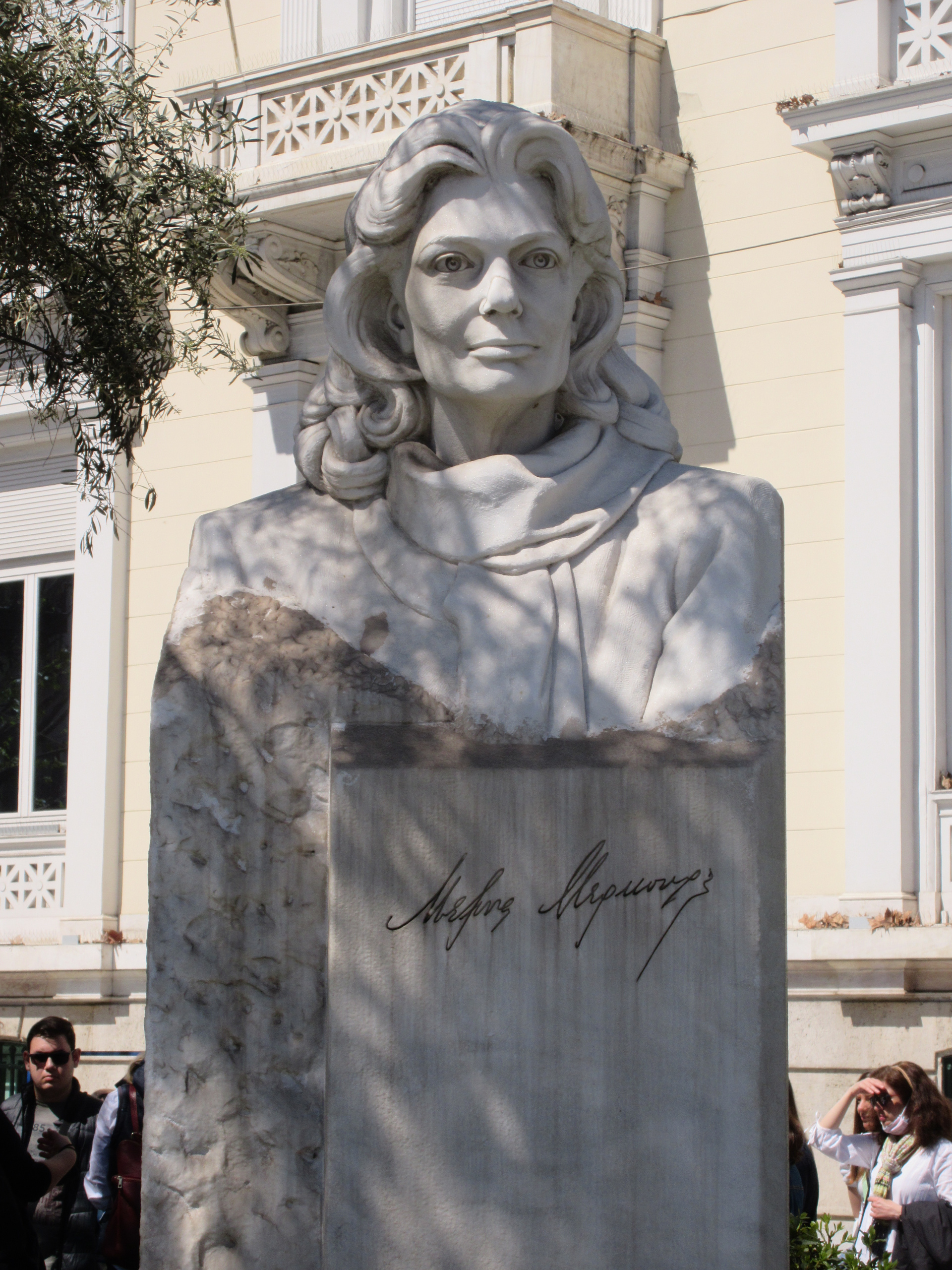
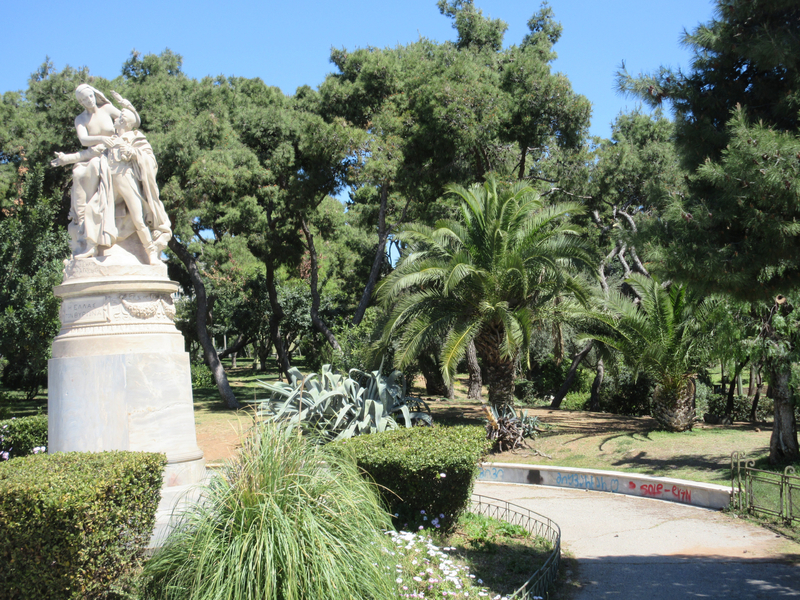
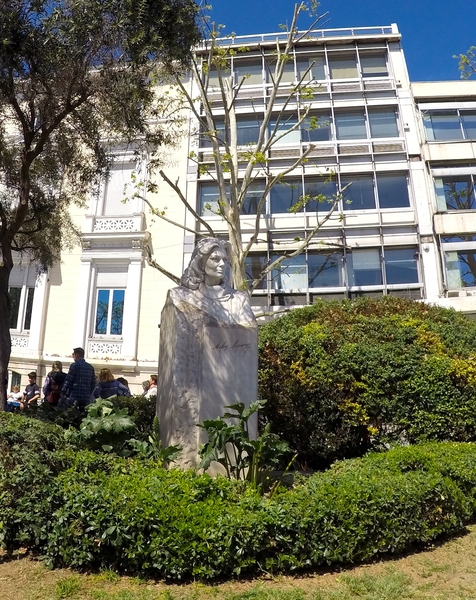
Melina Mercouri, a powerhouse woman of Greek sophistication and talent
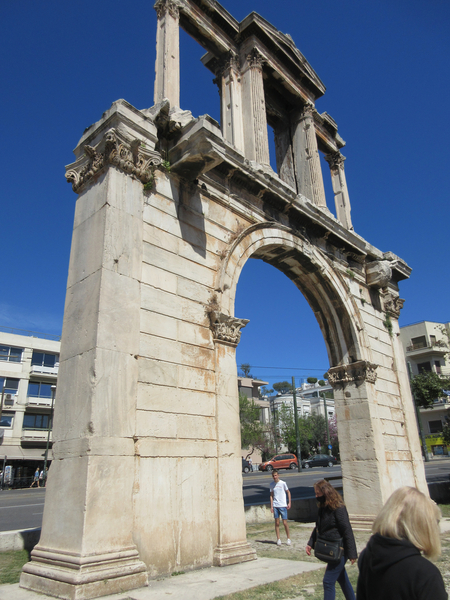
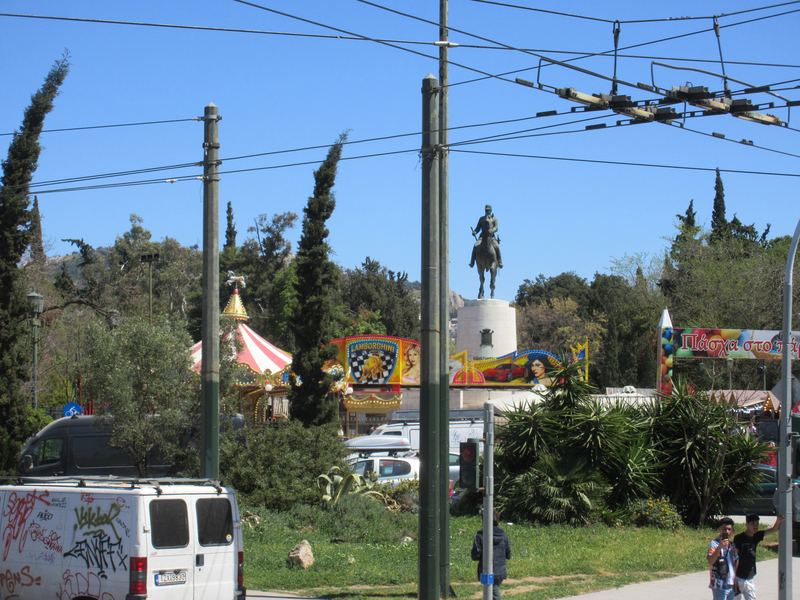
The next morning after a nice hotel breakfast we walked into a beautiful sunny day right to the marble monument of Melina Mercouri, which we had found the evening before. This beautiful monument is placed along the busy roadside on Vasilisis Amalias Avenue, surrounded by a small garden bed, across the road to Hadrian’s Arch. Han had seen it as we stood at the traffic lights looking for where to go on the hop on – hop off.
Now for those who don’t know, Melina was a hero of a woman, born in 1920, who in life became a magnificent, much-loved and glamorous Greek actress, singer, political activist, patriot, politician, and international ambassador. Han had befriended her in his late 60s/ early 1970s activist days against reigning Greek dictator Papadopoulos, who had stripped her of her birthrights. Nonetheless after the junta she became a powerful politician for her country’s freedom.
Here is where we went on the Hop On – Hop Off with the following loop:
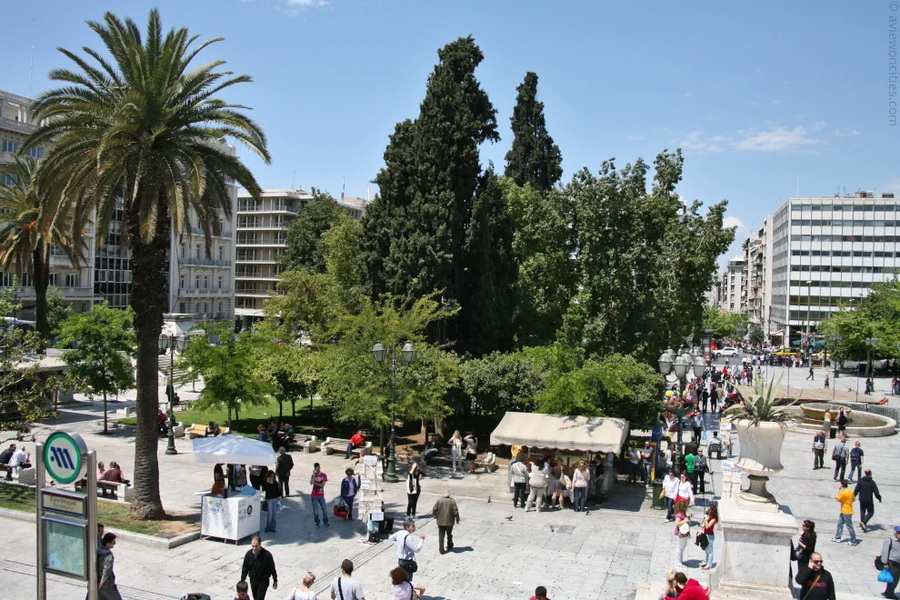
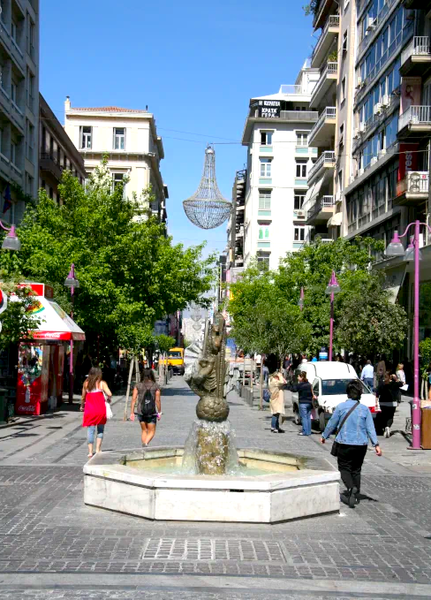
- Starting at Syntagma Square (Constitution Square) from where Ermou Street, the most important shopping street in Athens starts and goes all the w. The pedestrianized street leads all the way west past Monastiraki Square.
2. Our stop is across the street at Hadrian’s Arch, where we get on driving by
ACROPOLIS – PARTHENON: The Acropolis or “high city,” is an ancient citadel that was fortified in the 13th century BC and later transformed into a monumental complex for temples like the Parthenon. It functioned as a home for kings, a sanctuary for gods, and a defensive citadel.
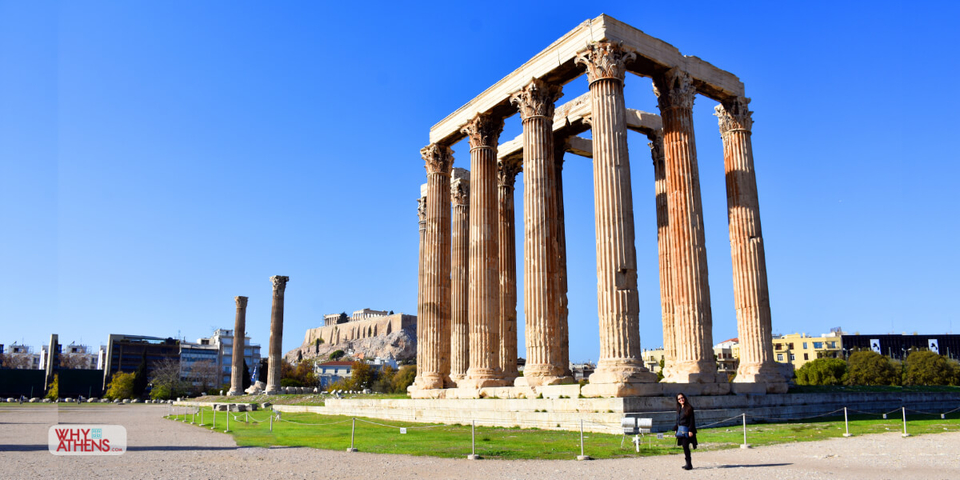
TEMPLE OF ZEUS: The Temple of Olympian Zeus in Athens is a massive, partially ruined, ancient Greek temple dedicated to Zeus, the king of the gods, notable for taking over 600 years to complete. It was built as a monument dedicated to Zeus and the center of the ancient Olympic Games.
PARLIAMENT & NATIONAL GARDEN
BENAKI MUSEUM is located in the family residence of the Benakis family and explores Greek culture. Admission is $15.
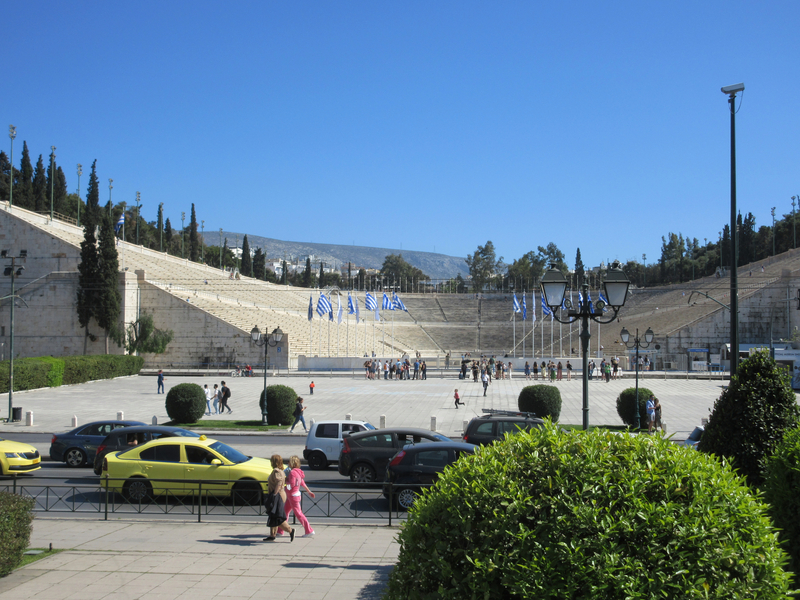
PANATHENAIC STADIUM: The Panathenaic Stadium or Kallimarmaro is a multi-purpose stadium in Athens, Greece. One of the main historic attractions of Athens, it is the only stadium in the world re-built in 1884 entirely of marble. It was the site for the first modern Olympic Games in 1906.
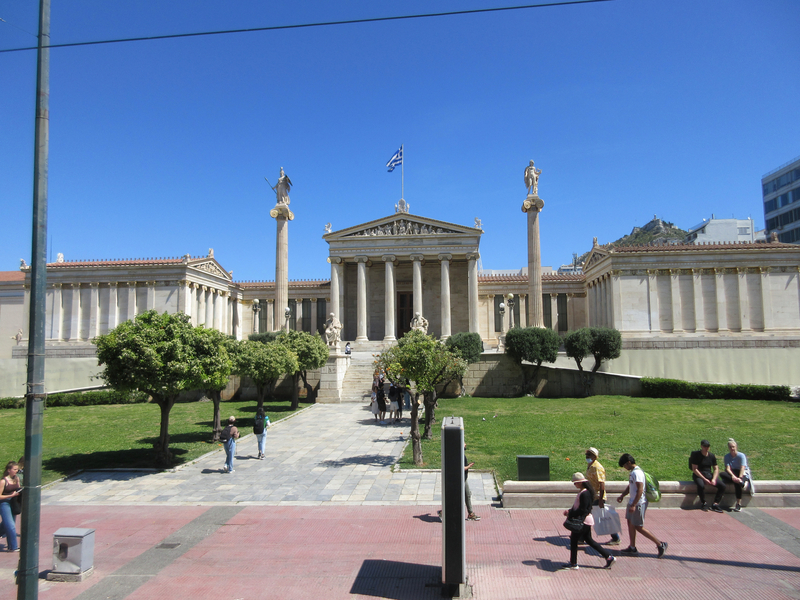
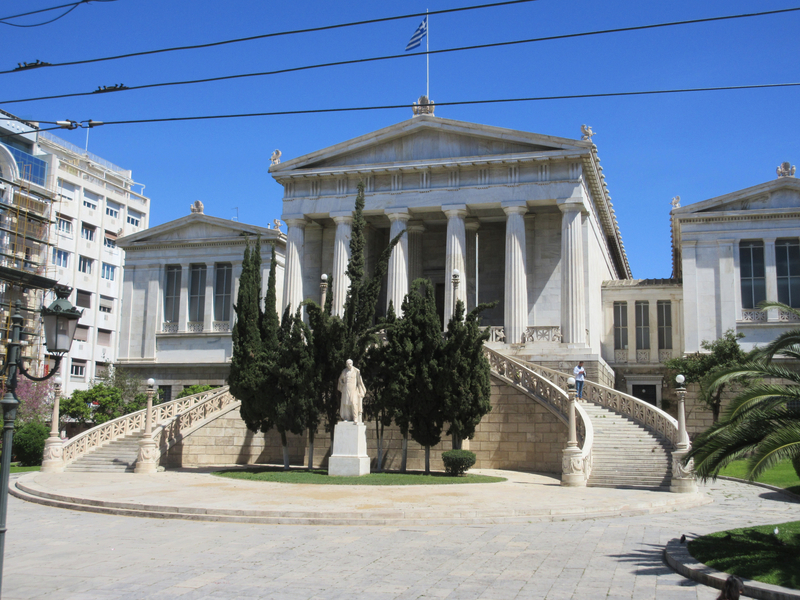
NATIONAL LIBRARY
ARCHAEOLOGICAL MUSEUM
OMONIA SQUARE (one of the triangle squares)
KARAISKAKI SQUARE
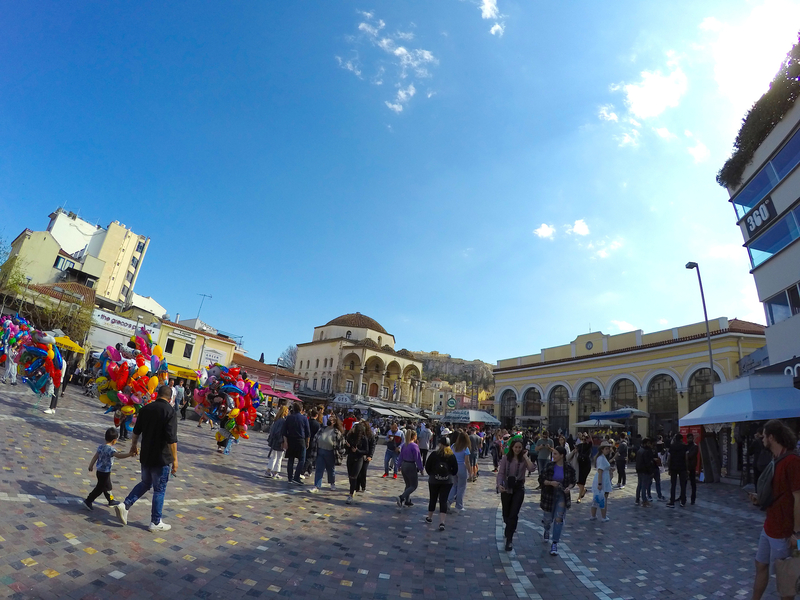
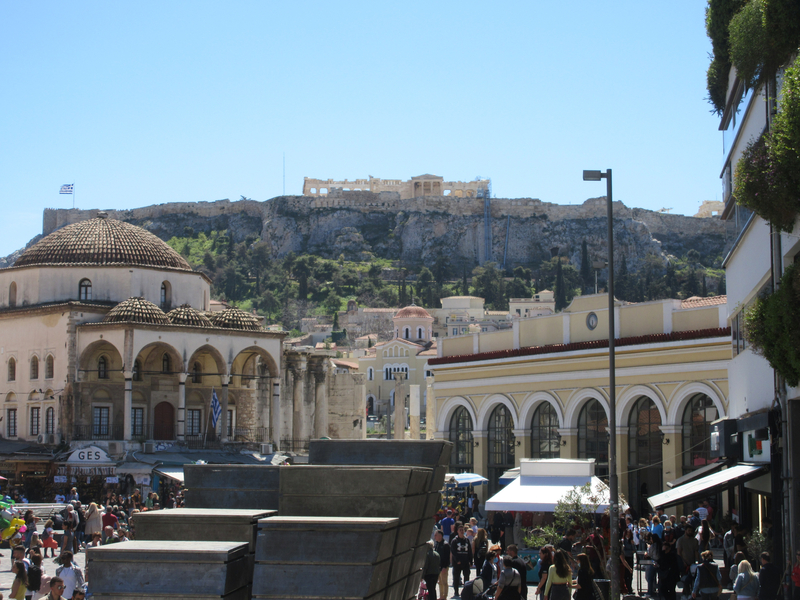
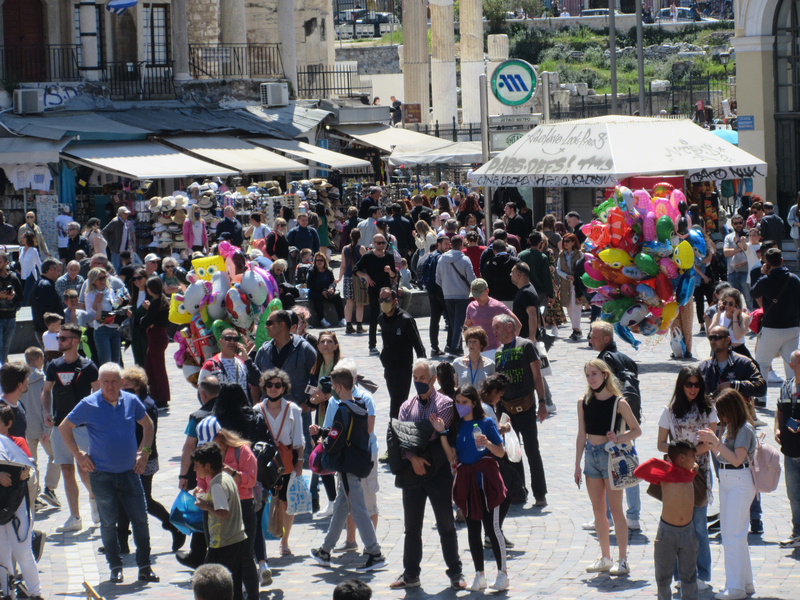
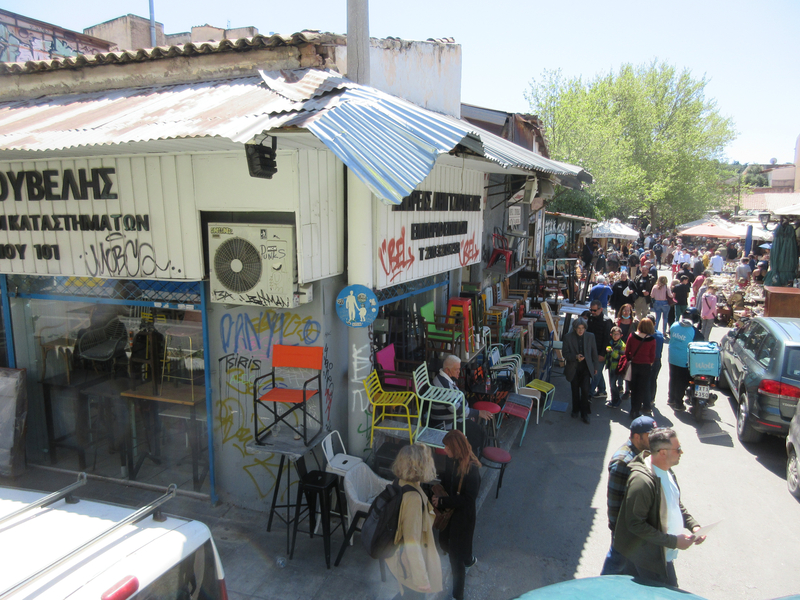
MONASTIRAKI square / THESSION Monastiraki is known for iconic landmarks including the ruins of Hadrian’s Library, the Ancient Agora and the rebuilt Stoa of Attalos, with a museum exhibiting Athenian artifacts. Monastiraki Flea Market is a jumble of shops selling artisanal soaps, handmade sandals and souvenir T-shirts. The surrounding streets are crammed with traditional tavernas and restaurants, many with Acropolis views
KOTZIA SQUARE – CITY HALL
BACK TO SYNTAGMA SQUARE
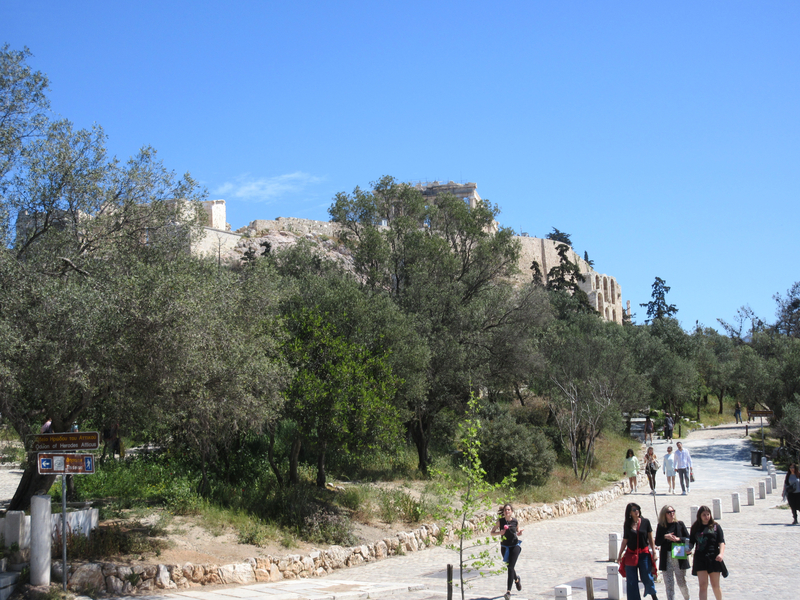
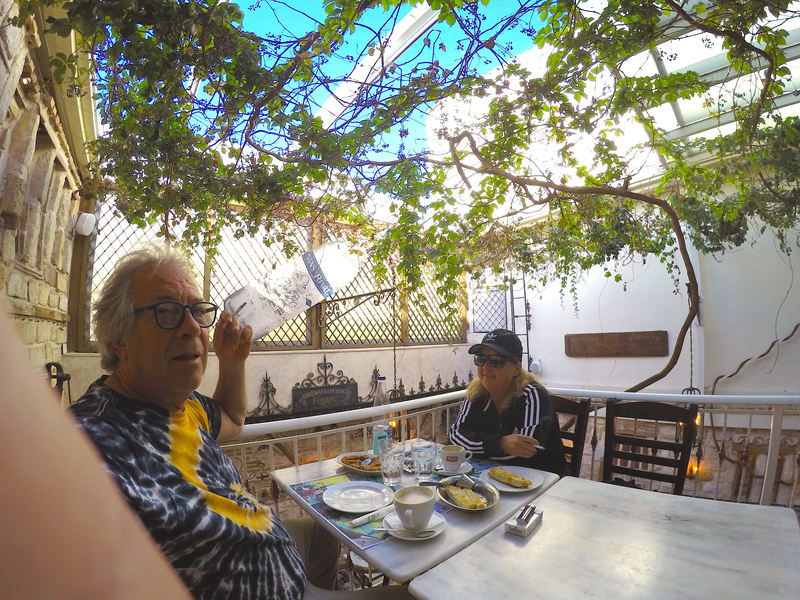
The next day was the last day of our 2022 travel vacation. Tomorrow we would be off to the Netherlands with Dutch vacation carrier Transavia for some last minute family visits over Easter Holidays, before returning to work on Beaver Island for the summer.
Today we decided to stroll towards Monastiraki Square and visit some of the abundant cultural and culinary opportunities. The Flea Market is actually what attracted us most, since we are typical treasure seekers. But first we took a quick visit to the ancient Stoa of Attalos. This was a stoa (covered promenade of shop or portico) in the Agora of Athens, built by and named after King Attalos II of Pergamon, who ruled between 159 and 138 BC. The building was reconstructed from 1952 to 1956 by the American School of Classical Studies at Athens and currently houses the Museum of the Ancient Agora. The Agora was the bustling heart of ancient Athens.
The following several hours were committed to working the shopping stalls at the huge Flea Market. We knew exactly how much in souvenirs and gifts we could take with us the next day and the prices were cheap.
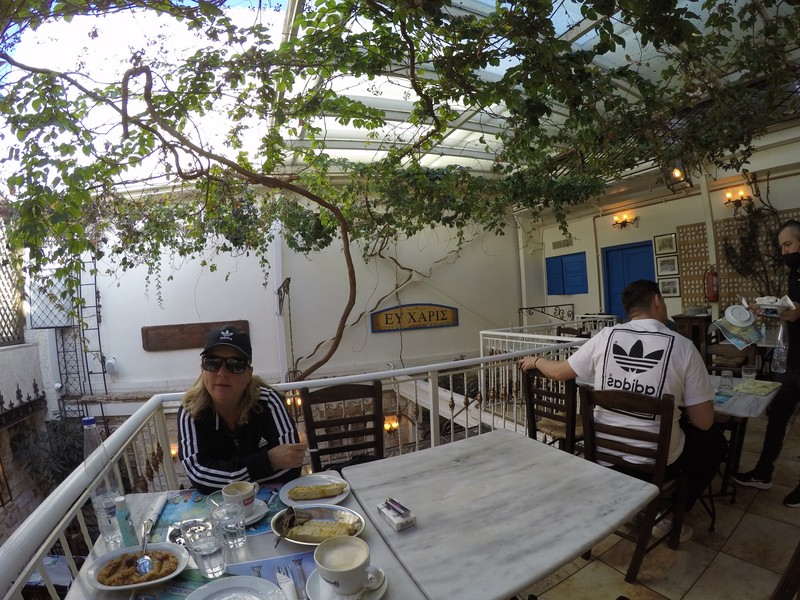
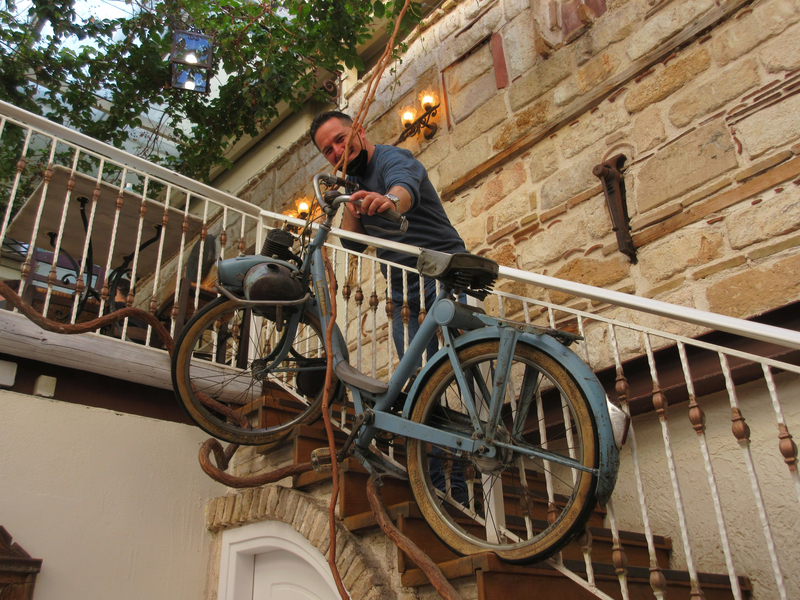
Our short stay in Athens was rounded off with a superb meal at a local restaurant, where the owner was decorating the ceiling with an old painted moped and a big smile on his face.
Life is good!



Recent Comments