

The south part of the Port of Civitavecchio
Port of Call : Civitavecchia/Rome
Storms have been severely affecting the port of call schedules on this cruise, probably a result of the time of year. The new captain of the ship, who took over the reigns in Barcelona, is a native Italian. He first tried to get us to Livorno, after the port city of Genoa became a serious non option. From Livorno the cruise director could service the Florence, Pisa, Siena, Volterra of the Tuscany region better, while even waterfront areas like gorgeous Cinque Terra could still be reached inside of 90 minutes by bus.
But the storm weather was relentless and in the early afternoon the captain announced that we were going to race another cruise ship for the last safe berth available at the Civitavecchia Cruise Port, which is Rome’s primary seaport, located about 45 miles northwest of the eternal city.
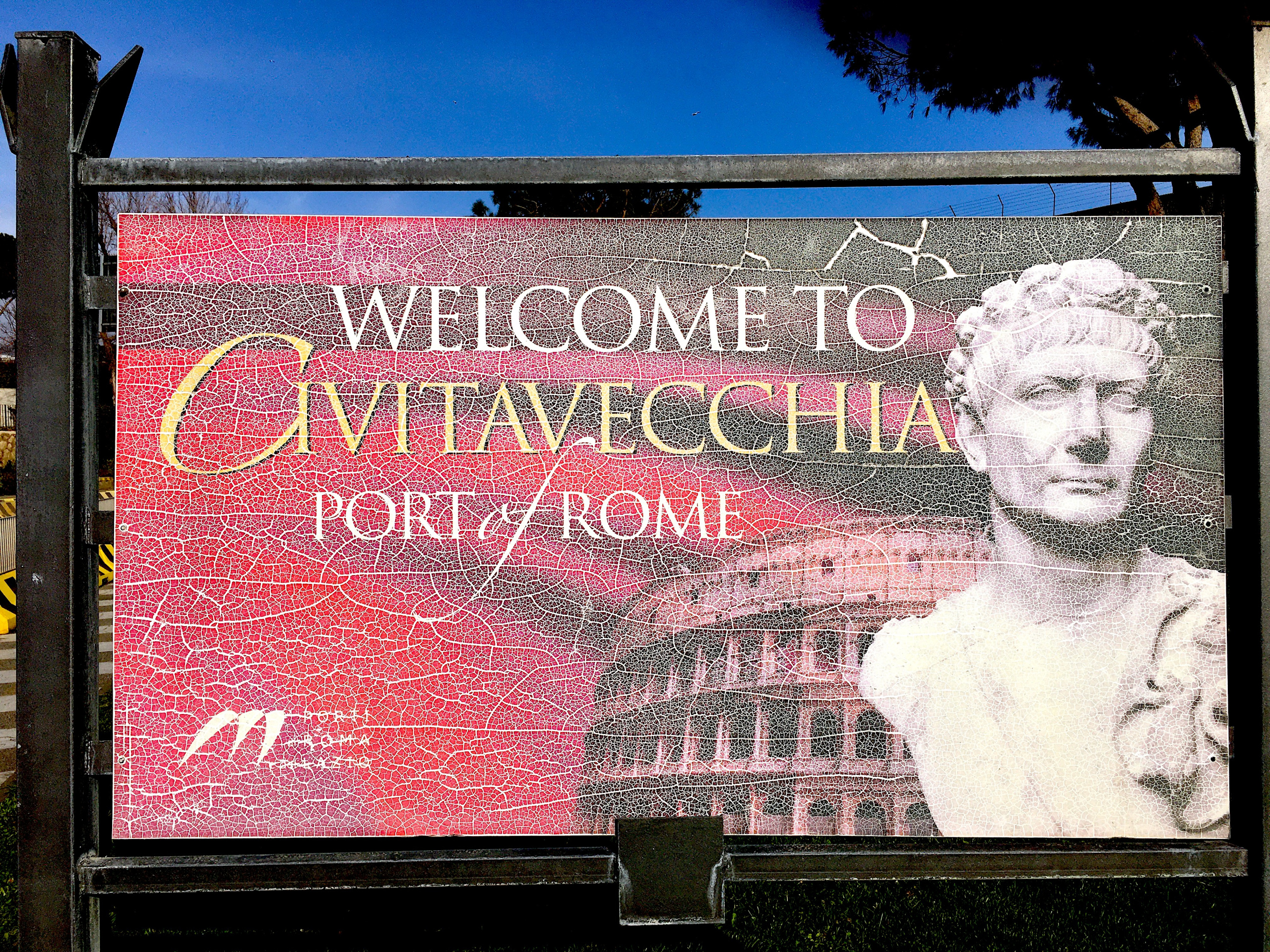
The Welcome sign says it all
During our 2016 visit to Italy, we never made it to Rome. Florence was as far south as we came and we were not impressed by (mainly) the Italians. But with Civitavecchia we now had access to Rome, the Eternal City, Civitavecchia often only considered as the sea gateway to Rome, offers an extra opportunity to explore its historical sites and local culture as it dates back to the early Roman society. Whether you’re interested in history, architecture, or local markets, the city provides a variety of experiences to enrich your visit. Here is what we did during our extra time at the port.

Civitavecchia War Memorial

Storage of fishing nets
The Port of Civitavecchia, built by Emperor Trajan (one of the 5 Great Emperors) at abt. 100 AD, throughout its 2,800 year history has played a central role in the exchanges and contacts of all Mediterranean peoples.
The port of Civitavecchia is clearly divided into a northern and southern area. The southern area is dedicated to tourist activities and cruises. Serving as a major hub for Mediterranean home base and port of call cruises and ferries to islands like Sardinia and Sicily, the port offers sometimes complex shuttle/train connections to Rome’s city center via the Largo de Laachcee train terminal. We found out on our second day in port, how complex the connections can get.
As we are getting a bit older (and wiser) we have learned to pace ourselves when it comes to visiting big cities. For this reason we decided to use the first day in port to explore Civitavecchia and dedicate the second day to Rome.
We used the free port shuttles to the main gate and from there we walked Civitavecchia’s old town center from Piazza Leandra – in the heart of the old Medieval district where there is the small Chiesa della Stella (“Church of the Star”) – then through the Archetto Passage which leads to Piazza Saffi: in this square you can see the old city walls built between 1513 – 1521.

San Lorenzo Fresh Market
The San Lorenzo Market (not to be confused with the San Lorenzo Leather market in Florence) – is located in the heart of the historic city center, near Piazza Regina Margherita. Here local people come to buy fresh food products (such as fruit and vegetables) and to buy fish in the well-known Fish market, which is the flagship of the city. Visiting the morning market is a pleasant experience, because it is very lively and busy: there are not only market stalls, but also many bars, pizzerias and shops.
The Cathedral of Civitavecchia is devoted to Saint Francis of Assisi, the Saint of the Animals and was destroyed in 1943 during the second world war, the church was rebuilt in 1950.
The National Archaeological Museum of Civitavecchia is located a few steps away from Fort Michelangelo, inside the eighteenth-century building commissioned by Pope Clement XIII in the eighteenth century. The museum has got three floors and presents a dive into the past among Etruscan finds, bronzes and ceramics from the dawn of Western civilization, the ancient and the Middle Ages.
If you have the time, grab a taxi (abt $12) and visit the Taurine Baths of Civitavecchia, also known as Baths of Trajan, are a remarkable archeological site located in the northern area of the city, about 3 miles from the port. They are open all year long from 9.30 a.m. to 13.30 p.m. and gave a concise insight into how Roman elite spent their daily afternoons.
If you can pull yourself away from the cruise ship fare and decide on an Italian treat, Civitavecchia is a maritime city and the real specialty is represented by fish restaurants. Traditional cuisine is bound to the sea, so there are many typical fish dishes like Civitavecchia’s Fish Soup, “Fettucine allo Scoglio” (long fresh pasta with seafood), Civitavecchia’s Poached Baby Octopuses, Periwinkles, Filled Calamari and much more.

MacDonalds for great WIFI
We decided instead to visit the local McDonalds, right outside the port gates, because it was time to check on family and friends with the help of McDonald’s guaranteed WIFI. Italy’s Wifi network is a still a little iffy for us spoiled people. After a couple of hours checking upon family, answering emails and learning more about the Russian aggression against Ukraine, we went back onboard the ship.



Recent Comments