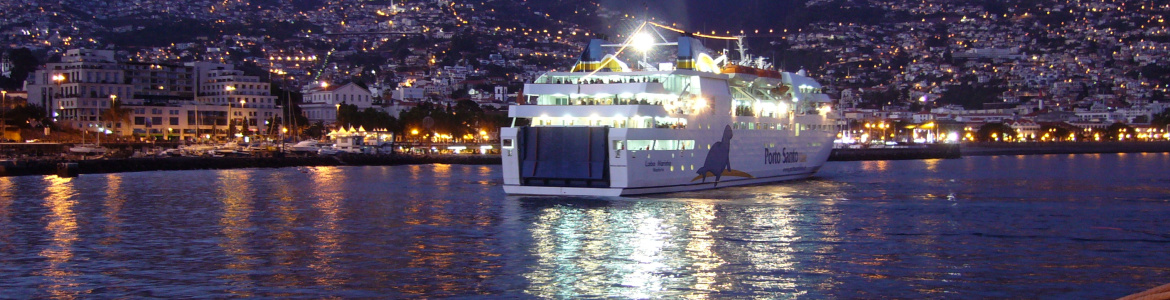
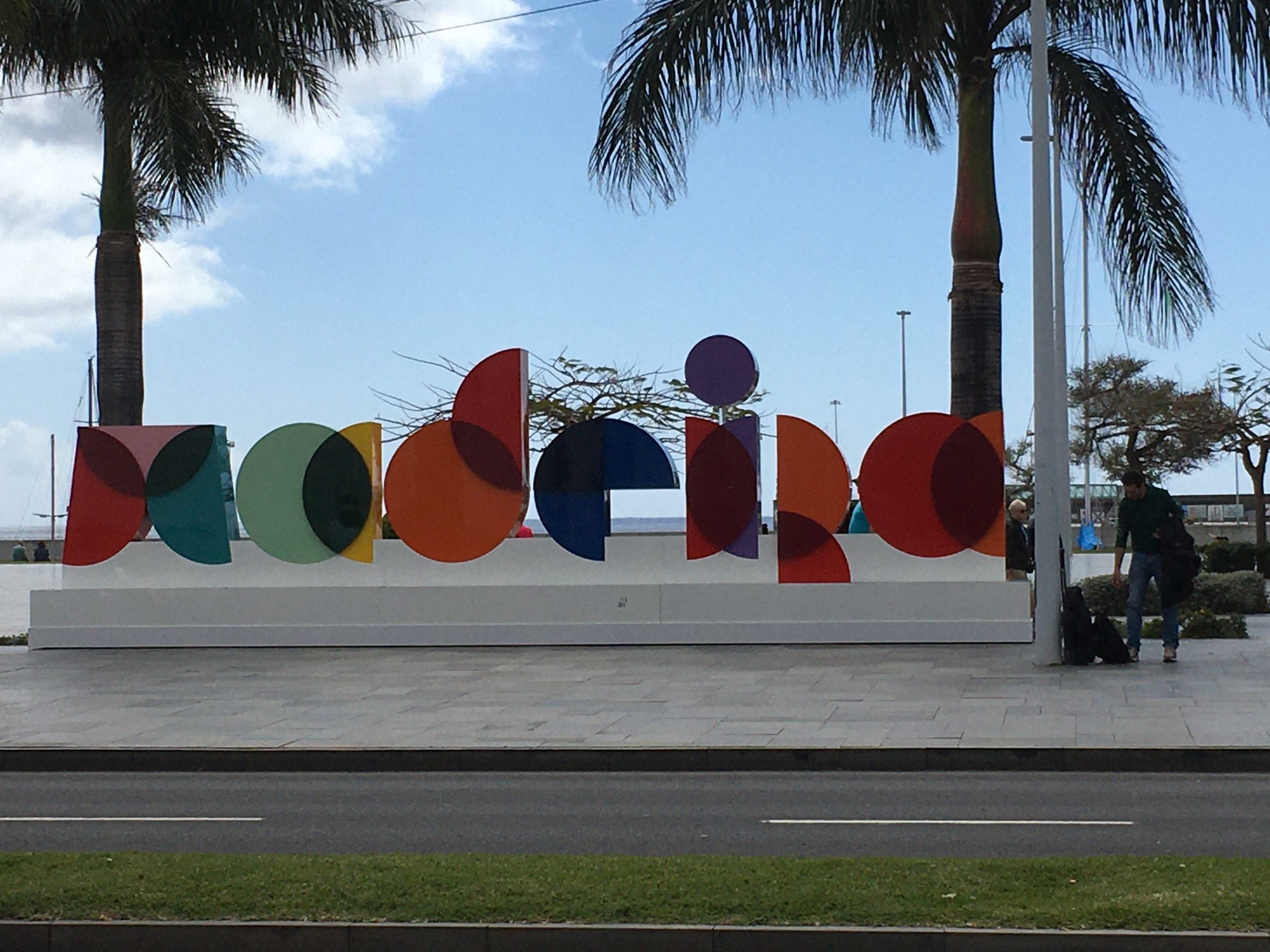
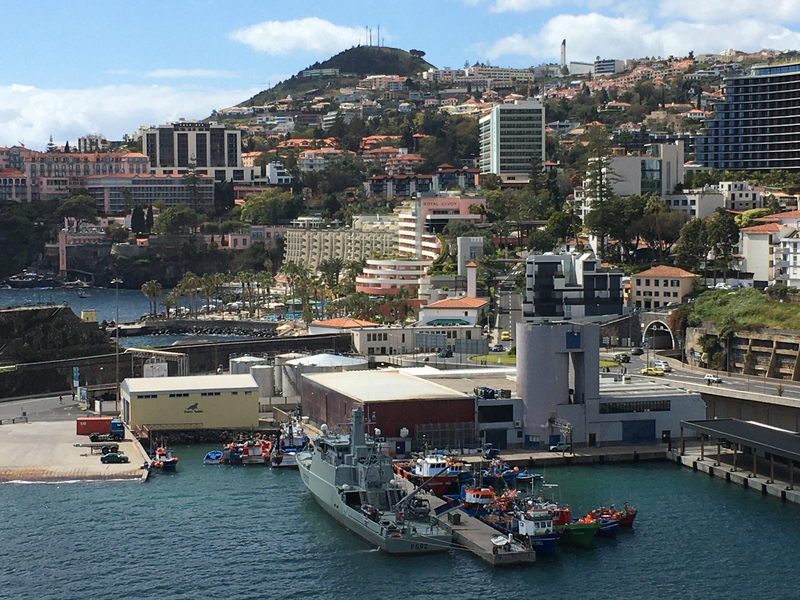
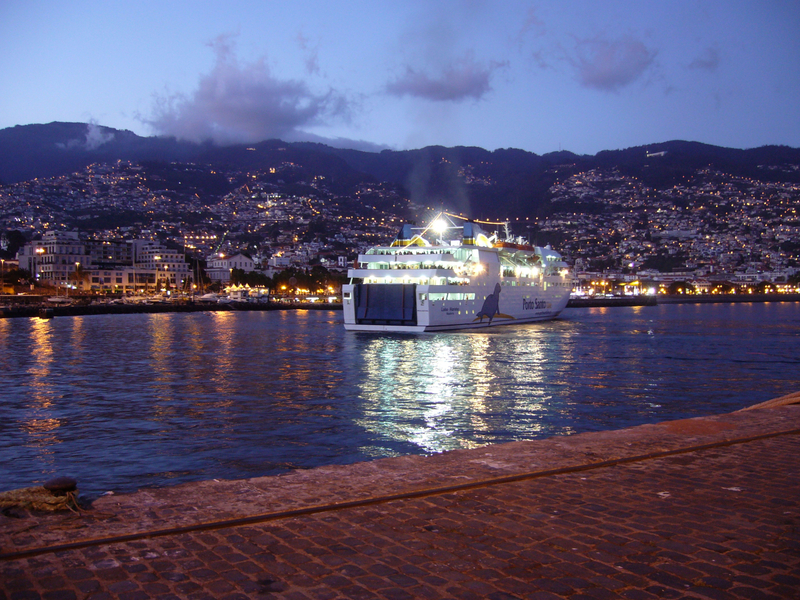
 After seven days on the Atlantic, the time had arrived for a day at Port of Call Madeira, Portugal’s Year-round Resort Island. The weather had been pretty good, so the island of Madeira was on the schedule. A great indicator on a cruise ship that you’re nearing land is that you all at once see birds sitting on railings or flying next to the ship. No diversions needed. Madeira is part of Portugal, as are the Azores, which are often featured on other cruise stops, and lately has become particularly known as the birthplace of soccer phenomenon Cristiano Ronaldo. Besides his own statue at walking distance from the cruise port, the islands international airport is also named after him.
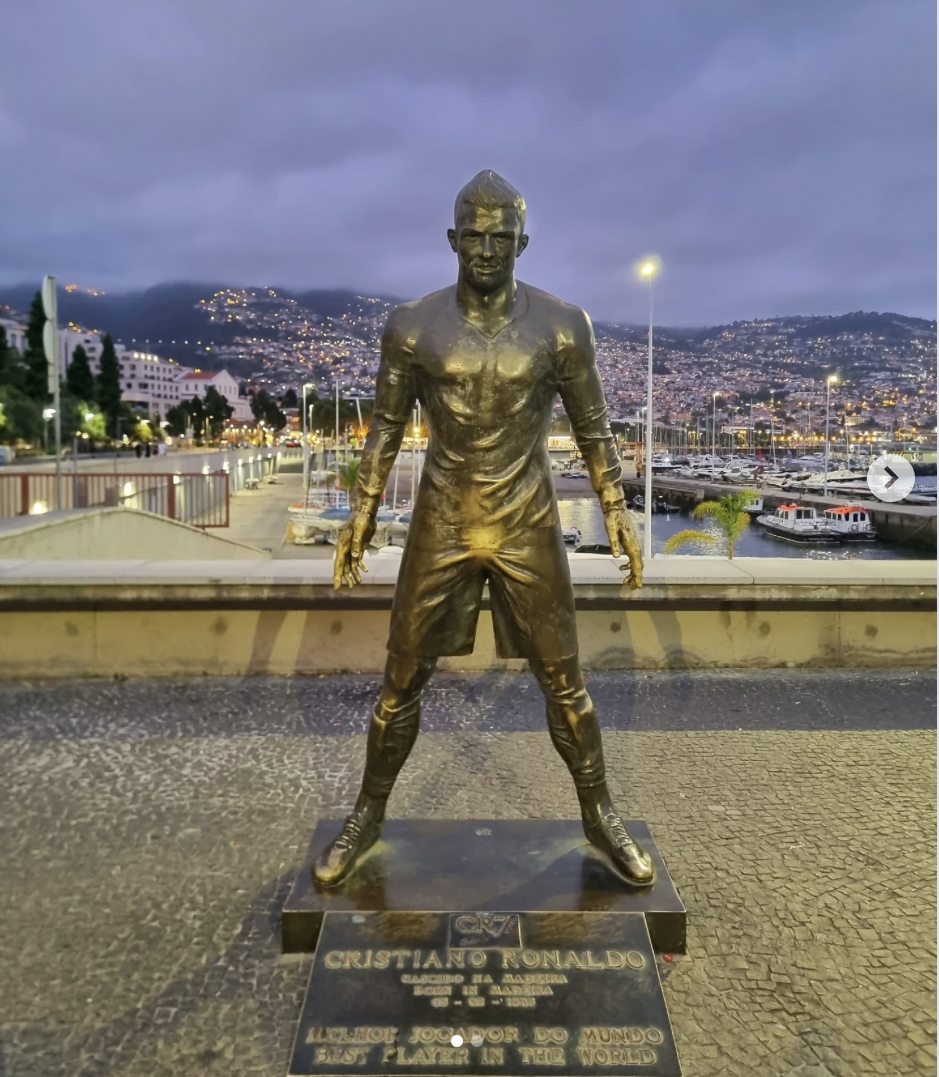
Cristiano Ronaldo, son of Madeira and first billionaire soccer player in history
Madeira
Madeiro was “officially”discovered sometime in the 14th century as an unpopulated island in what later became and archipelago of 4 islands about 430 miles to the southeast of the Portuguese mainland, although archeological evidence exists that the Vikings were there between the years 900 and 1030. Today the island is an autonomous region of Portugal and part of the European Union, so the Euro is their official currency. The island has a population of a little over a quarter of a million people, with an additional million or so tourists annually.
The island, and especially its capital Funchal, became prosperous early on in its development, as a major producer of cane sugar. Sadly the island was used to test the concept of sugar plantations being worked by slave labor. Later, after sugar production was abandoned, the now famous Madeira wines became prevalent in its economy, which today is based on year-round tourism.
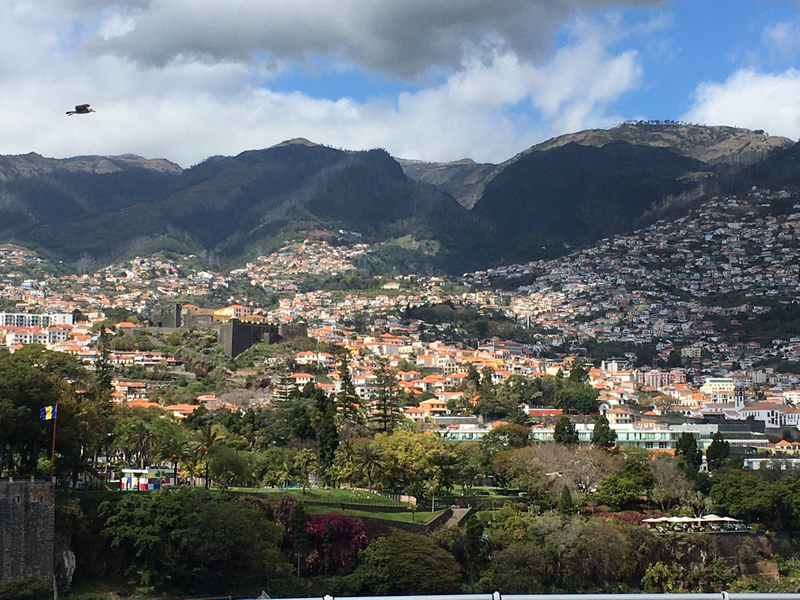
Han had been to the island in the 1970s and couldn’t believe the massive tourism development that had taken place here in 40 plus years. Most of this is of course in the capital city of Funchal, as the rest of the 280 sq.mile island is mostly formed by a central mountain range, rising up to about 6,000 feet at his highest point.
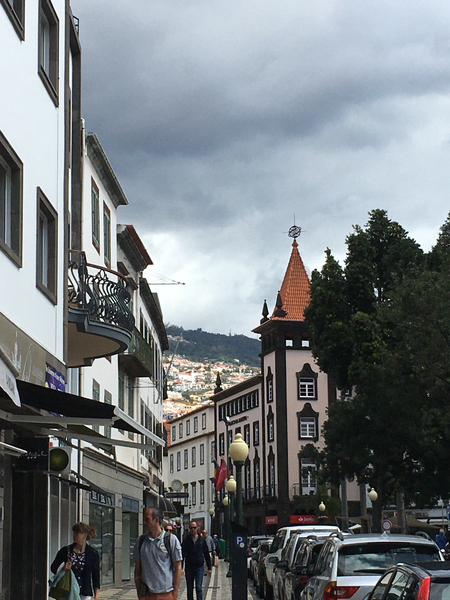
Even though the cruise line offers interesting island tours including culinary and cultural visits, we decided to walk into the city (only a 20 minute walk and just look around a bit. As we had learned a couple of years earlier, almost everybody in Portugal speaks English, so there was no language barrier.
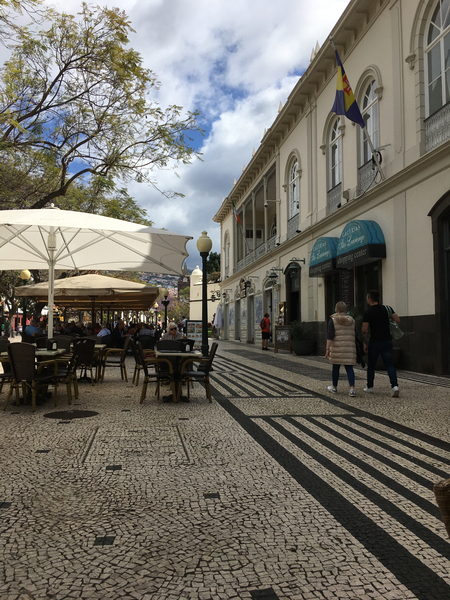
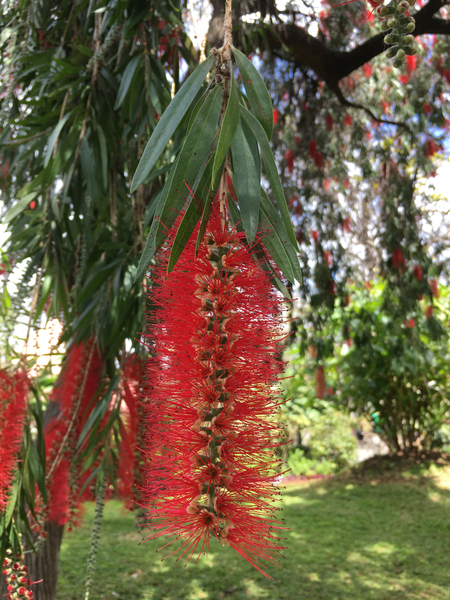
As the first stop after seven days on the ocean, just walking the streets and looking into shop windows is a great relaxation and leg stretcher. We had coffee on a side walk café, shopped some small trinkets in a couple of tourist shops, took pictures of some beautiful flowers in the wild and watched people go by in their pursuit of an island Sunday.
We did not have plans to dine ashore as the ship was leaving port already at 4pm and we planned our return for no later than 3:30pm with 30 minutes of port internet access. We did not take a $20 per day per connection internet package on the ship, which had tremendous problems on this trip anyway, because the satellites had been re-routed to monitor events in Ukraine.
Should you however plan to dine on Madeira, the many freshly caught seafood specialties as well as the traditional meat espetadas (brochettes) are highly recommended. Also make sure to get a piece of Bolo do Caco, the typical Madeiran flatbread that is shaped like a cake.
Note: A short warning is in place. Not until we left Europe from Amsterdam Airport a couple of weeks later, did we realize that TJ was literally an illegal in Europe. When entering Madeira via your Princess medallion, you enter the European Union without showing your passport. But when the medallion is enough to enter to location, it also registers when you leave, because the ship’s security knows you have returned aboard and therefore left that port of call. Well, since all our stops after Madeira only required the showing of the medallion, her passport was never stamped as having arrived in Europe. So imagine presenting your passport to the Border Control at Schiphol Airport-Amsterdam and a 6ft6 guy build like a concrete boulder looks down at you and asks you to come with him to a separate room, where you learn that you were in Europe illegally? Thankfully Han is still a Dutch citizen (European) and could explain in Dutch what had happened. Make sure to get a stamp in your passport, proving you did arrive legally in Europe!
Next stop was intended to be Gibraltar, but back on the ship we learned that bad weather changed that port to Cadiz in Spain.


Recent Comments